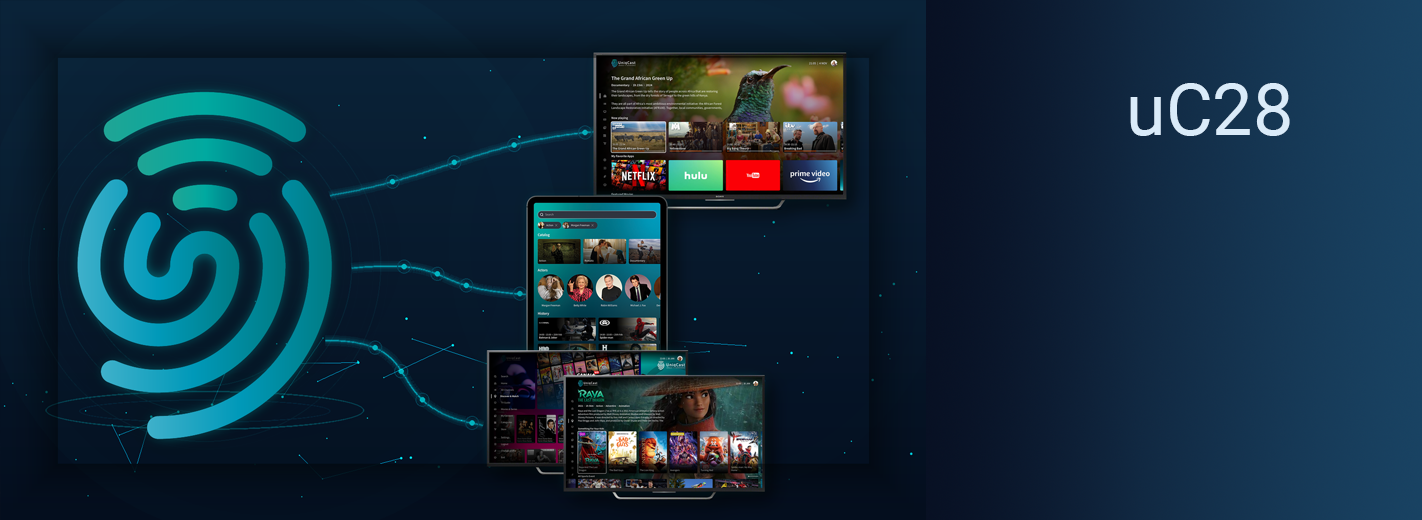
Lanzamiento de uC28: Fortaleciendo la plataforma para el crecimiento multioperador
Resumen rápido
Los servicios modernos de IPTV y OTT son cada vez más complejos de operar. Los operadores están creando servicios para múltiples pantallas, colaborando con socios de contenido externos, atendiendo a diferentes mercados, admitiendo diversos tipos de dispositivos y cumpliendo con las expectativas de los usuarios, moldeadas por las principales plataformas de streaming del mundo.
Para los espectadores, toda esta complejidad debe permanecer invisible. Esperan que el servicio sea rápido, pulido, personal y fácil de usar. Para los operadores, ofrecer esa experiencia requiere una plataforma que pueda escalar de forma fiable, adaptarse a diferentes modelos de negocio y simplificar las operaciones diarias.
La versión uC28 refuerza la plataforma UniqCast precisamente en esa dirección. Mejora los cimientos necesarios para el crecimiento de múltiples operadores, al tiempo que aporta actualizaciones prácticas para el usuario en STB, dispositivos móviles/web, Smart TV, Apple TV y sistemas de backend. El resultado es una versión que ayuda a los operadores a gestionar la creciente complejidad del servicio mientras siguen mejorando la experiencia de visualización en cada pantalla.
¿Por qué una plataforma para múltiples operadores?
Para los proveedores de plataformas que atienden a múltiples operadores, el crecimiento de IPTV/OTT conlleva un nivel de complejidad diferente. El desafío ya no es solo ofrecer un buen servicio para un operador, un mercado o una base de usuarios. El reto es dar soporte a varios entornos de operador de una manera que siga siendo escalable, manejable y comercialmente eficiente.
En la práctica, cada operador puede tener su propia estrategia de contenido, base de suscriptores, paquetes, requisitos regionales, marca, combinación de dispositivos, configuración de entrega y procesos operativos. Un operador puede centrarse intensamente en la televisión en directo y el catch-up, otro puede priorizar el VOD y el contenido transaccional, mientras que otro puede depender más de socios de agregación o catálogos localizados. Incluso cuando comparten la misma base de plataforma, necesitan suficiente separación y flexibilidad para operar como servicios distintos.
Sin la arquitectura de plataforma adecuada, esto puede llevar rápidamente a una infraestructura duplicada, trabajo de configuración repetitivo, mayores costes operativos y una implementación más lenta de nuevos operadores o mercados. Cada operador adicional puede convertirse en una nueva capa de complejidad. Los equipos pueden verse obligados a duplicar flujos de trabajo, mantener entornos separados, repetir integraciones o gestionar las diferencias de servicio manualmente. Con el tiempo, esto puede ralentizar el crecimiento y hacer que la plataforma sea más difícil de evolucionar.
Una plataforma preparada para múltiples operadores cambia ese modelo. Permite a los proveedores de plataformas y a los grandes operadores gestionar varios entornos de servicio de manera más eficiente, manteniendo la flexibilidad necesaria para que cada operador tenga su propia identidad comercial y regional. El objetivo no es simplemente alojar múltiples servicios en un solo lugar. El objetivo es apoyar el crecimiento sin multiplicar el esfuerzo operativo al mismo ritmo.
Esto es especialmente importante para los grandes operadores y proveedores de plataformas existentes que se están expandiendo a través de mercados, marcas, filiales o redes de socios. Necesitan una base que les ayude a incorporar nuevos operadores más rápido, adaptarse a las necesidades regionales con mayor facilidad y reducir la duplicación innecesaria en infraestructura y operaciones. Al mismo tiempo, deben seguir ofreciendo una experiencia fiable y pulida a los usuarios finales, independientemente del operador, dispositivo o mercado al que pertenezcan.
Es por eso que la preparación para múltiples operadores se está convirtiendo en un requisito estratégico en IPTV/OTT. Ofrece a los propietarios de plataformas una forma más sólida de escalar su negocio mientras mantienen el control sobre la complejidad. También crea una base más eficiente para el desarrollo futuro, ya que las nuevas funciones, integraciones y mejoras de rendimiento pueden introducirse en un entorno de plataforma más amplio en lugar de tratarse como proyectos aislados para cada operador.
Este es el contexto más amplio detrás de uC28. La versión refuerza la plataforma UniqCast para entornos donde la escalabilidad, la flexibilidad operativa y el crecimiento eficiente se están volviendo críticos. Admite las necesidades de los proveedores de plataformas y los grandes operadores que desean crecer más allá de las implementaciones de servicio único y gestionar ecosistemas IPTV/OTT más complejos con mayor confianza.
Aspectos destacados de la versión general
La idea central detrás de uC28 es la preparación de la plataforma para el crecimiento. A medida que los servicios de IPTV/OTT se expanden a través de más dispositivos, fuentes de contenido, redes de entrega y entornos de operador, la plataforma subyacente debe volverse más flexible, escalable y eficiente.
Esta versión supone un avance importante en ese ámbito. La multitenencia de plataforma y operador en Content Manager refuerza el soporte para entornos multioperador, donde una mejor separación, escalabilidad y gestión de recursos resultan esenciales. Los clústeres de transcodificación específicos para CDN ofrecen a los operadores mayor flexibilidad a la hora de preparar el contenido para diferentes redes de distribución. Al mismo tiempo, las mejoras generales en el rendimiento del backend ayudan a reducir la carga del servidor y a mejorar los tiempos de respuesta en toda la plataforma.
uC28 también mejora la forma en que los operadores controlan y configuran la experiencia de servicio. La gestión del diseño es ahora más consciente del dispositivo, el soporte para audio y subtítulos externos se ha ampliado a todas las plataformas cliente y la plataforma está mejor preparada para servicios que combinan catálogos de contenido nativo y agregado.
En cuanto a la cara al usuario, uC28 sigue modernizando la presentación del contenido, la personalización y la usabilidad diaria. La versión añade nuevas formas de destacar contenido popular y exclusivo, mejora la distinción de perfiles, refuerza las opciones de visualización multilingüe y perfecciona la experiencia en las principales plataformas cliente.
En este sentido, uC28 es una versión centrada en hacer que la plataforma UniqCast esté lista para un crecimiento rápido: más fácil de escalar, más fácil de controlar y mejor preparada para la realidad operativa de los servicios modernos de IPTV/OTT.
Actualizaciones de la aplicación para STB
Para muchos operadores de IPTV, el decodificador (STB) sigue siendo la pantalla central del hogar. Es donde convergen la televisión en directo, el VOD, el catch-up, las aplicaciones y los hábitos de consumo del hogar. En uC28, la aplicación para STB recibe actualizaciones que hacen que esta experiencia en la pantalla principal sea más atractiva, controlada y receptiva.
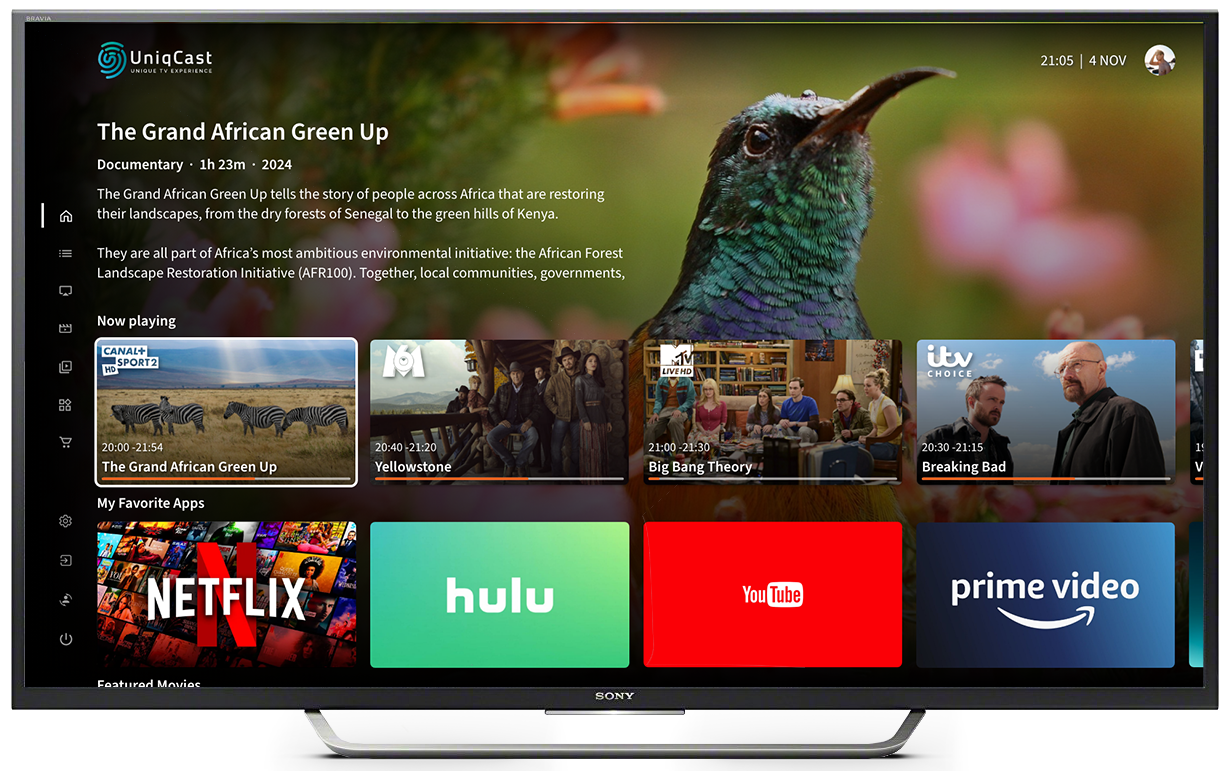
El panel de control se enriquece con filas de VOD de marca "Top 10" y "Exclusivo". Estas filas ofrecen a los operadores una forma más eficaz de presentar contenido popular, premium o seleccionado editorialmente directamente en la pantalla de inicio del STB. En lugar de esperar a que los usuarios naveguen profundamente por los catálogos, la plataforma puede mostrar contenido importante y hacer que el descubrimiento sea más inmediato.
Esto es especialmente valioso en grandes bibliotecas de contenido, donde el principal desafío a menudo no es la disponibilidad, sino la visibilidad. Al proporcionar a los operadores mejores herramientas para mostrar el contenido, uC28 ayuda a que la experiencia en el STB se sienta más activa y cercana a la presentación de contenido que los usuarios conocen de los principales servicios de streaming.
uC28 amplía el control del hogar con control parental para aplicaciones externas. Los operadores ahora pueden restringir el acceso a aplicaciones de terceros instaladas por perfil. Este es un paso importante, ya que las plataformas de televisión de los operadores incluyen cada vez más no solo contenido gestionado de TV y VOD, sino también aplicaciones externas.
El contenido agregado también se vuelve más rico en el STB con soporte para audio múltiple y subtítulos de Megogo. Los usuarios pueden acceder a múltiples pistas de audio y subtítulos para los activos de VOD de Megogo, haciendo que el contenido externo se sienta más completo dentro del servicio del operador. Para los mercados multilingües y los servicios basados en la agregación de contenido, esta es una mejora importante, ya que los usuarios esperan que los catálogos externos se comporten con el mismo nivel de calidad y flexibilidad que el contenido nativo.
uC28 también mejora la velocidad y fluidez diarias del uso del STB. Las miniaturas en directo están optimizadas para una experiencia de navegación más estable y sin saltos. La navegación por la lista de canales es más rápida cuando los usuarios exploran los diálogos de categorías. Las mejoras en el cambio rápido de canal (FCC), respaldadas por una biblioteca FCC actualizada, ayudan a reducir el tiempo de espera al cambiar de canal en los dispositivos compatibles.
En conjunto, estas actualizaciones del STB mejoran tanto la presentación como la capacidad de respuesta de la experiencia en el salón. Los operadores obtienen un mejor control sobre la promoción y el acceso al contenido, mientras que los usuarios se benefician de una navegación más fluida, opciones de contenido más ricas y una interfaz de televisión más pulida.
Funciones para móviles y web
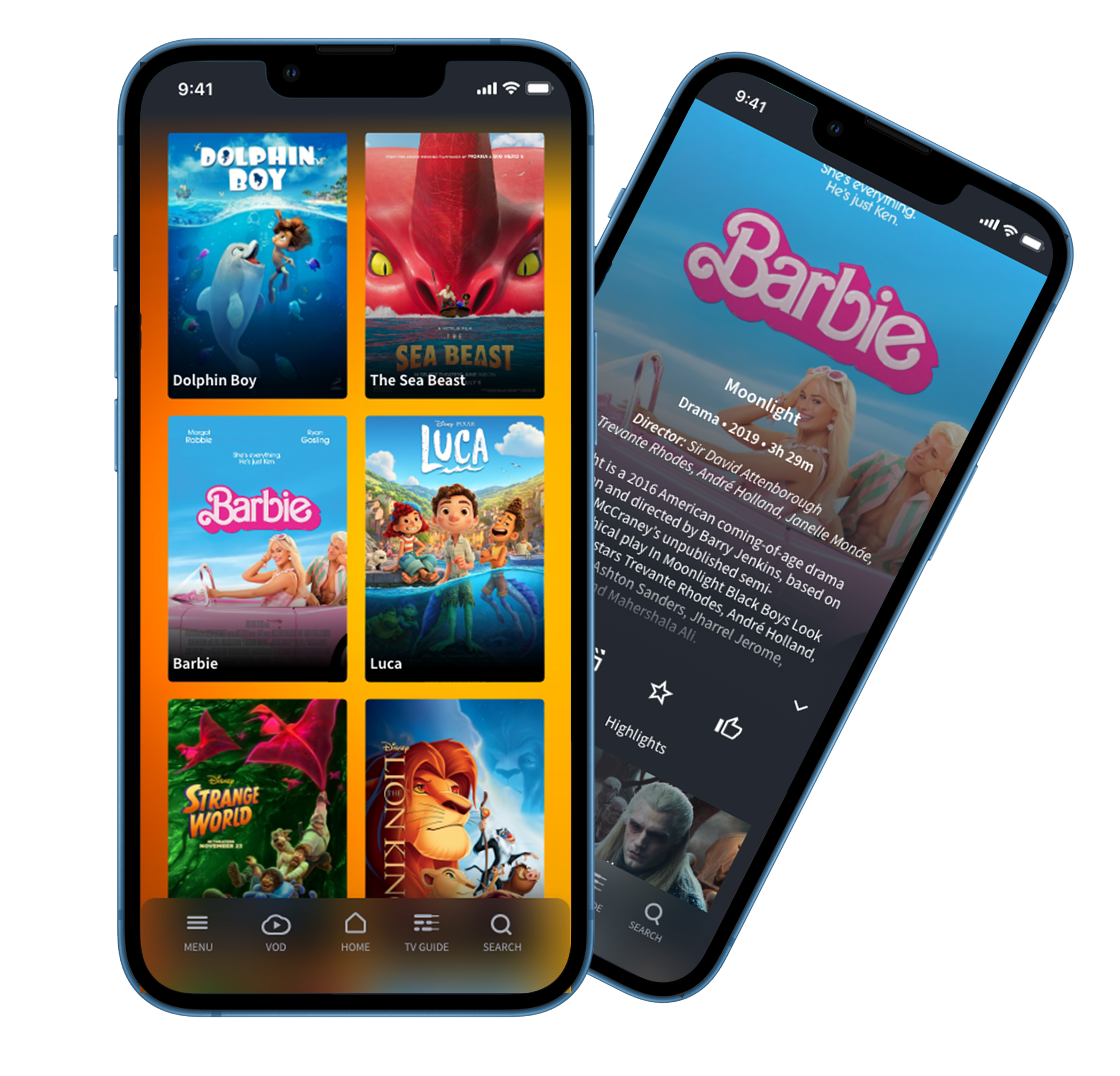
Las aplicaciones móviles y web desempeñan un papel diferente en el recorrido de IPTV/OTT. A menudo se utilizan para una navegación rápida, visualización personal, reproducción de contenido, gestión de compras o para continuar con el servicio fuera de la pantalla principal del televisor. En uC28, el enfoque está en hacer que estas experiencias sean más claras, convenientes, adaptables regionalmente y estables.
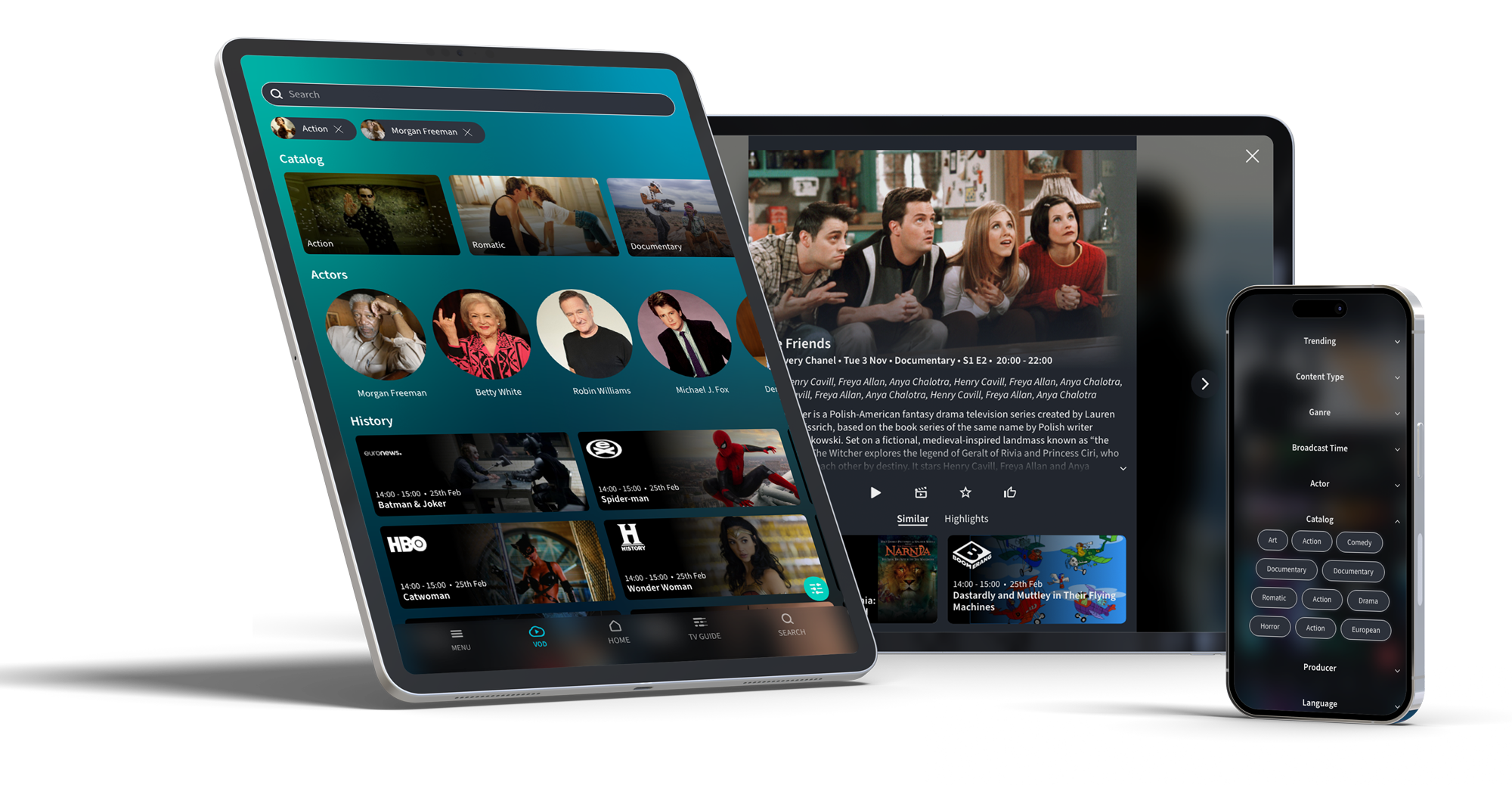
Una fila dedicada de contenido TVOD comprado ofrece a los usuarios una forma sencilla de encontrar y volver a ver películas y episodios que ya han adquirido. Esta es una mejora importante para el contenido transaccional, ya que la experiencia no termina cuando se realiza la compra. Los usuarios necesitan confiar en que el contenido pagado sigue siendo fácil de acceder.
Esta versión también introduce formatos de fecha y hora configurables. Los operadores pueden adaptar cómo se muestran las fechas y horas en la aplicación, incluyendo formatos regionales y visualización de 12 o 24 horas. Este tipo de detalle de localización puede parecer pequeño, pero es fundamental en servicios que operan en múltiples mercados.
Los accesos directos a categorías también reciben mejoras visuales, con un mejor posicionamiento de los títulos en las tarjetas de acceso. Esto favorece la legibilidad y la coherencia en la experiencia de navegación. Los elementos de descubrimiento deben ser claros a simple vista, especialmente en pantallas móviles y web, donde los usuarios suelen moverse rápidamente por la interfaz.
La estabilidad y el rendimiento también son pilares fundamentales de la actualización para móviles y web. uC28 incluye importantes esfuerzos para reducir los bloqueos en Android e iOS, junto con correcciones en la reproducción, la navegación y los flujos de la interfaz de usuario.
Con uC28, las versiones móvil y web se vuelven más cómodas para los usuarios y más adaptables para los operadores, mientras que el trabajo continuo en estabilidad ayuda a que el servicio se perciba más fiable en diferentes escenarios de uso.
Smart TV
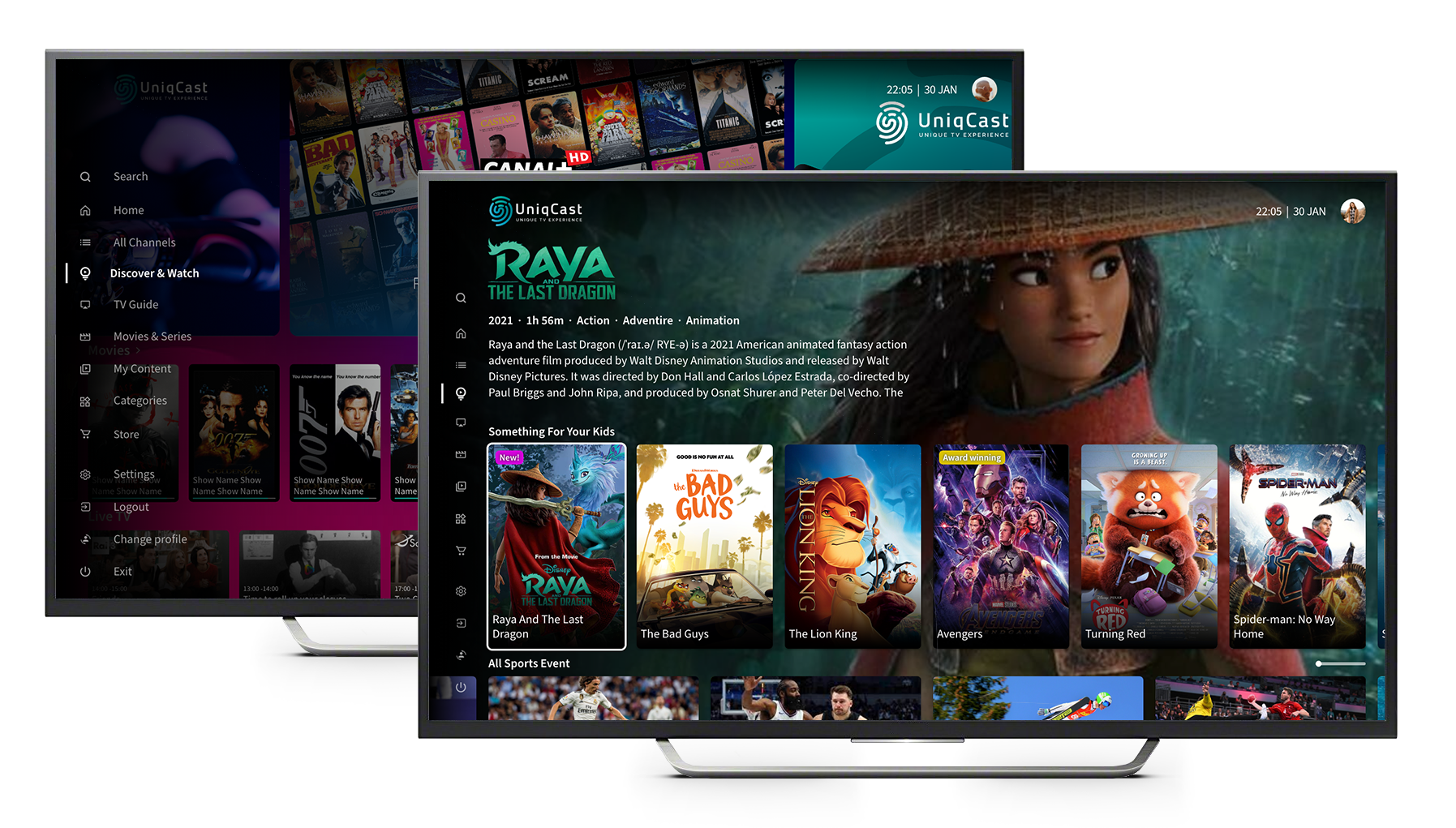
Las aplicaciones para Smart TV llevan el servicio del operador directamente a las pantallas conectadas, a menudo sin necesidad de un decodificador independiente. Los usuarios esperan que estas aplicaciones sean pulidas, rápidas y familiares. uC28 refuerza la experiencia en Smart TV con mejoras en la reanudación de contenidos, segmentación, visibilidad de aplicaciones, transparencia en las grabaciones, notificaciones y rendimiento percibido.
La nueva tarjeta de "Último visto" en el panel principal ayuda a los usuarios a retomar rápidamente el contenido que estaban viendo. Esto reduce los pasos de navegación y respalda uno de los comportamientos de visualización más comunes: volver a algo que ya se había empezado.
El filtrado de banners basado en etiquetas de suscriptor ofrece a los operadores una forma más precisa de gestionar promociones y campañas. En lugar de mostrar el mismo banner a todos los usuarios, estos pueden segmentarse según las etiquetas de cada suscriptor. Esto permite una comunicación más relevante dentro del servicio y proporciona a los operadores mejores herramientas de segmentación.
Las aplicaciones de terceros ahora se muestran en una fila dedicada de "Apps" en el panel de control de la Smart TV. A medida que los servicios IPTV/OTT se convierten en centros de entretenimiento más amplios, organizar las aplicaciones de forma clara se vuelve una parte importante del diseño general del servicio. uC28 también añade información sobre el uso del almacenamiento NPVR, permitiendo a los usuarios ver el espacio ocupado en su grabador de red directamente desde la aplicación.
Los mensajes dentro de la aplicación son ahora más flexibles gracias al posicionamiento configurable en pantalla. Los operadores pueden decidir dónde aparecen las notificaciones, lo que les ayuda a comunicarse con los usuarios sin interrumpir innecesariamente la experiencia de visualización. Esto es especialmente importante en pantallas grandes, donde la ubicación del mensaje tiene un fuerte impacto en la usabilidad.
Varias mejoras en Smart TV se centran en hacer que la interfaz se sienta más fluida y receptiva. La animación de las tarjetas enfocadas proporciona una respuesta visual más clara cuando los usuarios se desplazan por el contenido. Los marcadores de posición de carga (skeleton loading) mejoran la experiencia mientras se cargan las filas de contenido, reduciendo la sensación de espera. El comportamiento de la lista de canales ahora puede definirse desde la pantalla de diseño, dando a los operadores un mayor control sobre la navegación de TV en vivo.
uC28 también introduce notificaciones de inactividad para televisores en habitaciones, lo que resulta útil en entornos de hostelería donde las aplicaciones de TV pueden permanecer abiertas durante largos periodos. Esto ofrece a los operadores mejores herramientas para gestionar sesiones inactivas en entornos de despliegue especializados.
Apple TV
Apple TV también avanza en esta versión.
Los catálogos dinámicos ahora cuentan con soporte completo, incluyendo secciones de catálogo dedicadas, integración en el panel principal y navegación por múltiples pantallas de catálogo. Esto acerca a Apple TV a las capacidades ya disponibles en otras plataformas principales.
También se han añadido ajustes de accesibilidad a Apple TV, incluyendo ayuda y documentación, así como un mecanismo de comentarios. Esto mejora la usabilidad, cumple con las expectativas de la plataforma Apple y ofrece a los usuarios un camino más claro para obtener orientación o enviar sugerencias cuando lo necesiten.
Backend
La sección de Backend es donde el valor central de uC28 se vuelve más visible desde la perspectiva del operador. Si bien muchas mejoras de esta versión optimizan la interfaz de usuario, las actualizaciones del backend fortalecen la capa de plataforma que hace posible la escalabilidad, la flexibilidad y la eficiencia operativa.
Una de las mejoras más importantes es la multitenencia de plataforma y operador para Content Manager. Content Manager ahora admite la multitenencia tanto a nivel de plataforma como de operador, lo que permite un procesamiento de contenido escalable en entornos de múltiples operadores con un mejor aislamiento y gestión de recursos. Esto es especialmente relevante para implementaciones que necesitan dar soporte a múltiples marcas, regiones, filiales, socios o modelos comerciales dentro de un entorno de plataforma más amplio.
uC28 también introduce clústeres de transcodificación específicos para CDN. Los operadores pueden configurar clústeres de transcodificación por CDN, lo que permite que la preparación del contenido se alinee mejor con las diferentes redes de distribución. Esto otorga a los operadores un mayor control sobre el procesamiento de contenido y ayuda a que la plataforma se adapte a configuraciones de infraestructura más complejas.
La gestión del diseño en CSMS Admin se vuelve más flexible con una configuración separada para los tipos de dispositivos Web y Móvil/Tableta. Esto brinda a los operadores un control más granular sobre cómo se presenta el servicio en diferentes formatos. En lugar de forzar un enfoque de diseño único en todas las pantallas, los operadores pueden adaptar la presentación con mayor precisión a la forma en que los usuarios interactúan con cada dispositivo.
La nueva API externa para la ingesta de archivos multimedia publicitarios ayuda a optimizar los flujos de trabajo de publicidad al permitir que los archivos multimedia se ingesten mediante programación en la infraestructura interna. Esto reduce la manipulación manual y respalda operaciones de campaña más eficientes a medida que las actividades publicitarias y promocionales se integran más en los servicios IPTV/OTT.
El posicionamiento de las notificaciones dentro de la aplicación ahora se puede configurar desde el backend, lo que brinda a los operadores un control central sobre dónde aparecen los mensajes en las plataformas cliente.
El manejo de la EPG también ha mejorado. El analizador de EPG ahora admite dos tipos de imágenes adicionales, una nueva ruta de API y se ha ampliado la asignación de etiquetas XMLTV personalizadas. Estas mejoras aumentan la flexibilidad de integración con fuentes EPG externas y permiten un mejor manejo de los metadatos.
CSMS Admin también recibe mejoras operativas prácticas. Los administradores ahora pueden restablecer contraseñas directamente desde la interfaz de administración, lo que reduce la fricción en la gestión diaria de la plataforma. Los formularios del Catálogo Dinámico tienen un formato de visualización mejorado, lo que los hace más fáciles de leer y gestionar.
En conjunto, las actualizaciones del backend hacen de uC28 una versión base más sólida. Ayudan a los operadores a escalar de manera más efectiva, gestionar entornos más complejos, reducir la carga, mejorar la flexibilidad y respaldar mejores experiencias en todas las aplicaciones cliente.
Una versión creada para la siguiente etapa de crecimiento de IPTV/OTT
uC28 mejora la plataforma UniqCast en dos niveles. En la superficie, los usuarios reciben una experiencia más pulida y cómoda en STB, móvil/web, Smart TV y Apple TV. El contenido es más fácil de descubrir, los activos comprados son más accesibles, la navegación en Smart TV se siente más moderna, las opciones multilingües son más sólidas y las aplicaciones siguen volviéndose más estables y receptivas.
Debajo de esa experiencia, los operadores obtienen una base más sólida para el crecimiento. La gestión de contenido multiinquilino, la transcodificación específica para CDN, el rendimiento mejorado del backend, los diseños más flexibles, el manejo más sólido de metadatos, un mejor almacenamiento en caché y herramientas operativas más eficientes ayudan a que la plataforma admita entornos IPTV/OTT más complejos.
uC28 no es solo una versión con mejoras visibles, sino una versión que prepara la plataforma para la siguiente etapa de crecimiento del operador. A medida que los servicios se expanden a través de más pantallas, catálogos, socios, mercados y modelos de infraestructura, UniqCast ofrece a los operadores una base más sólida para gestionar esa complejidad mientras continúa mejorando la experiencia de visualización diaria.