

Mobile OTT: Monetization, Packaging, and Go-to-Market Execution
Quick Summary
The Mobile TV Playbook, Part 4
This article is Part 4 of a broader series based on the whitepaper The Mobile TV Playbook, which explores how mobile operators can build, differentiate, and scale OTT video services in a market shaped by mobile-first behavior, fragmented content ecosystems, and rising expectations for simplicity.
In this fourth part, the focus shifts from strategy and infrastructure to monetization and execution. It looks at how mobile OTT operators should package value, structure bundles, combine subscription and advertising models, create live-event monetization, and extend reach through partner-led distribution. Just as importantly, it shows that success does not come from launching more features, but from aligning commercial design with real customer behavior and backing it with an operating model built for activation, retention, quality, and continuous improvement.
Business Models and Packaging
Mobile OTT operators rarely fail because they lack features. They fail because the commercial model and packaging do not match how people actually buy, cancel, and return to streaming. On mobile, the customer decision is fast and often impulsive. The offer must be easy to understand, easy to activate, and flexible enough to fit subscription fatigue without turning the service into a discount treadmill.

The packaging principles that matter most
Before choosing specific models, mobile operators should align on a few packaging rules that consistently separate strong propositions from weak ones.
Make value visible in the first session
If the customer cannot see what they get in under a minute, the offer will underperform. Packaging must translate into immediate content access, clear live entry points, and a home screen that highlights what is included today.
Reduce decision fatigue
Mobile customers do not want a catalogue of bundles. They want a small number of tiers that feel logical. Most operators should limit consumer-facing complexity to three levels: entry, core, and premium, then use add-ons for sports ott streaming and events.
Design for churn without rewarding churn
Streaming churn is structural. Packaging should include downgrade paths, pause options, and event passes so customers can reduce spend without leaving completely. The best outcome is not preventing cancellation at all costs, but keeping customers inside the operator ecosystem.
Tie OTT value to mobile value
The operator advantage is integration of content with plans, devices, identity, and loyalty. Packaging should consistently answer the question: why is this better when bought from a mobile operator than when bought directly.
The core monetization models for mobile OTT operators
Most successful operator propositions blend multiple models. The key is to keep the customer experience simple while making the economics resilient.
Plan-bundled subscription tiers
Bundling a streaming service into mobile plans remains one of the most effective retention tools available to operators, especially when implemented as a tiered upgrade path rather than a short-term promotion.
A practical structure is:
- Entry plan benefit with limited access such as a starter catalogue, basic live channels, or a rotating partner offer
- Core entertainment tier that includes the operator service plus one or two major partner subscriptions
- Premium tier that adds higher video quality, multi-device allowances, additional partner services, and premium live capabilities
The commercial logic is straightforward. Bundles reduce churn by increasing switching friction, and they increase ARPU by converting entertainment into a plan differentiator rather than a standalone add-on.
Super-aggregation marketplace revenue
Super-aggregation allows operators to earn distribution margin and create a single place where customers manage subscriptions. This marketplace model can be monetized in several ways:
- Revenue share on partner subscriptions sold through operator channels
- Placement fees for promotional visibility inside the operator hub
- Bundle constructs that improve partner conversion in exchange for better commercial terms
- Incremental paid features such as advanced profiles or premium discovery
The critical success factor is that the marketplace must feel like an experience, not a billing page. Unified discovery and simple subscription management are what make the operator hub sticky enough to sustain partner economics.
Advertising supported tiers and FAST channels
Advertising supported video is particularly relevant for mass-market mobile audiences. It lowers the entry barrier, increases reach, and creates an upgrade funnel.
Mobile operator implementations typically fall into two formats:
- AVOD or hybrid tiers inside the main app, using ads to subsidize access
- FAST channel lineups that behave like lean-back TV and improve session length with minimal decision effort
Hybrid and FAST advertising supported layers also give operators a monetization path for users who will not pay for another subscription but still represent valuable engagement and data signals.
Transactional live events and sports passes
Live events enable mobile-native monetization that matches real viewing behavior. Many fans do not want another monthly subscription. They want access for a specific weekend, tournament, or match.
High-performing pass models include:
- Weekend sports passes
- Tournament passes
- Team passes
- Single-event purchases for concerts, fights, or special broadcasts
Operators can increase conversion by connecting passes to mobile moments: one-tap purchase, instant entry, and clear messaging around low latency and reliability.
Wholesale and B2B2C distribution
Operators can extend OTT monetization beyond direct consumer subscriptions by packaging streaming into enterprise and partner channels:
- Venue partnerships for stadium and arena experiences
- Hospitality packages for hotels and serviced apartments
- Transport partnerships where offline and mobility features matter
- Corporate employee benefit bundles
This model is especially valuable when it shares content cost across multiple distribution streams and increases reach without relying purely on consumer marketing spend.
How to Launch and Scale Mobile OTT
A mobile OTT service does not succeed on launch day. It succeeds when it becomes a repeatable system for acquiring users efficiently, keeping them engaged, monetizing them across multiple models, and improving the experience continuously. That requires an operating model that looks more like a modern digital product organization than a one-time service rollout.
Define a clear market position before you define features
Mobile OTT operators often start with an internal debate about content and platform capabilities. The better starting point is positioning. A defensible market position creates focus and prevents feature sprawl.
A strong position typically answers three statements clearly:
- Who the primary audience is for the first twelve months
- What the service helps them do better than alternatives
- Why the operator is uniquely qualified to deliver that value
Once a position is chosen, capabilities such as super-aggregation, AI discovery, offline, and low-latency live become implementation details in service of that position.
Choose the right route to market: on-net first, then expand deliberately
Most operators should treat the existing mobile base as the primary launch audience, then expand distribution in phases.
A typical sequence is:
- Phase one on-net launch to existing subscribers through self-care apps, retail, and digital campaigns
- Phase two expansion to converged customers if fixed broadband and pay TV are part of the portfolio
- Phase three controlled off-net expansion where it improves scale economics or content negotiations
The strategic advantage of on-net first is entitlement simplicity and conversion efficiency. Off-net can be valuable later, but it should not dilute the service identity or overcomplicate support in the early stages.
Build a go-to-market plan that combines acquisition, activation, and habit formation
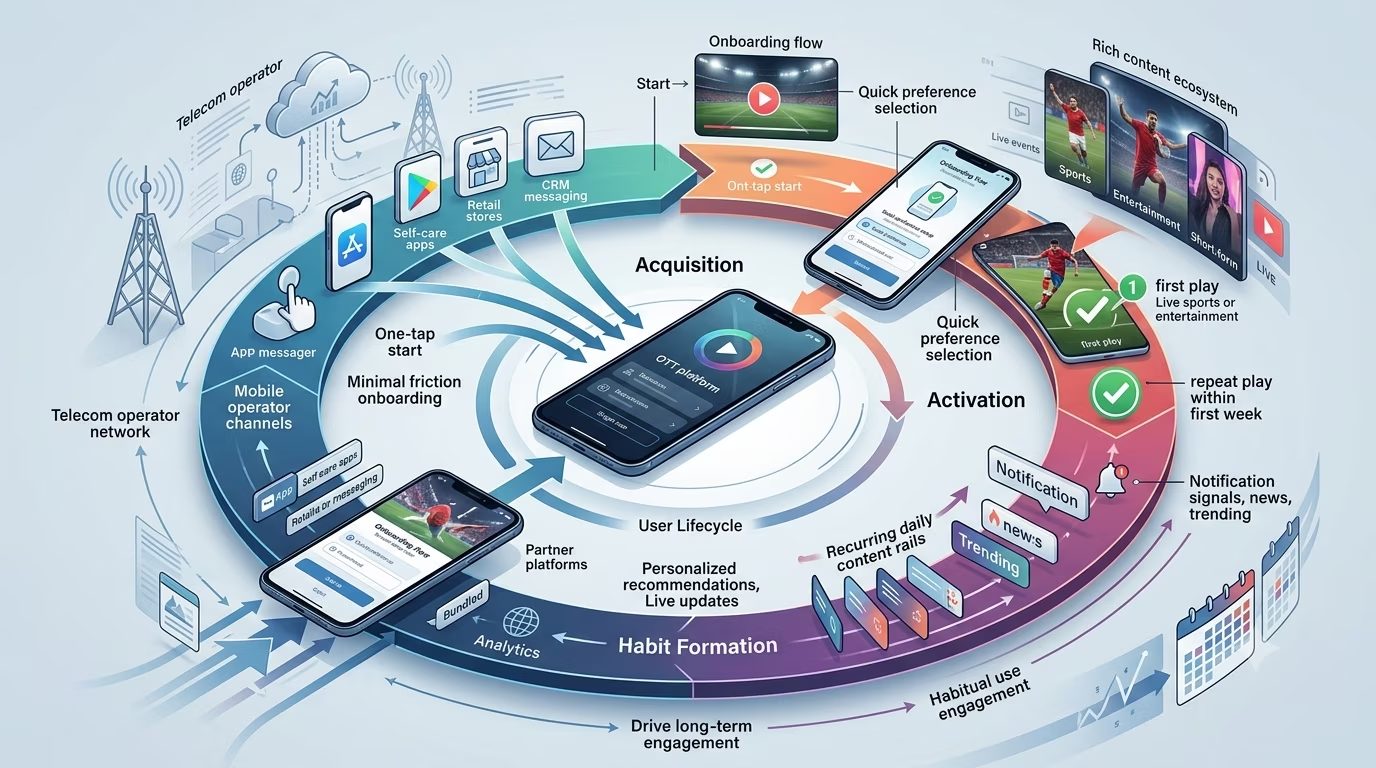
OTT growth is often treated as a funnel problem. For mobile operators it is better treated as a lifecycle system with three connected goals.
The first goal, acquisition, leverages mobile operators’ owned channels as the primary go-to-market engine. Instead of relying heavily on external marketing, operators should utilize channels such as self-care applications, plan upgrade journeys, retail point-of-sale activations, and targeted CRM messaging. The core objective is critically reducing the number of steps required for an interested user to transition to their very first play, making the path from interest to consumption as direct as possible.
The second phase is activation, which starts the moment a user signs up and is the initial point of churn risk. The first session must immediately validate the service's promise. Best practices for activation include a clear welcome experience confirming the included features, a brief discovery flow to capture user preferences in under a minute, and visible entry points for live or event-led content. Operators must measure this phase by first play and repeat play within the first week, confirming that the user has experienced the service's value quickly and effectively.
Finally, long-term success is secured through habit formation by establishing recurring moments, moving beyond reliance on sheer catalogue size. Habit drivers include personalized live and trending content rails that refresh daily, short-format content perfect for micro-moments, and relevant, controllable notifications, particularly for time-sensitive events like sports or breaking news. The ultimate goal is for the operator's service to become the user's default starting point for deciding what to watch, even if the final playback occurs within a bundled partner application.
Establish an operating model that supports continuous delivery
A successful mobile OTT service must iterate quickly without sacrificing reliability. That requires a product-led operating model with clear ownership.
A practical operating structure includes:
- Product leadership that owns the customer promise and the roadmap
- Engineering and platform teams that own app releases, backend services, integration layers, and observability
- Content operations that manage metadata quality, editorial programming, rights windows, and merchandising rules
- Growth and CRM teams that manage the lifecycle funnel and experimentation
- Commercial partnerships that manage OTT partner relationships, revenue share terms, and joint promotions
- Service assurance and customer care integration that treats QoE and live readiness as brand-critical
Make partner integration scalable through standardization
Most mobile OTT strategies depend on multiple partners: streaming apps, content providers, analytics vendors, ad technology, and private OTT CDNs. Partner growth can easily outpace operator capacity if each integration is treated as a custom project.
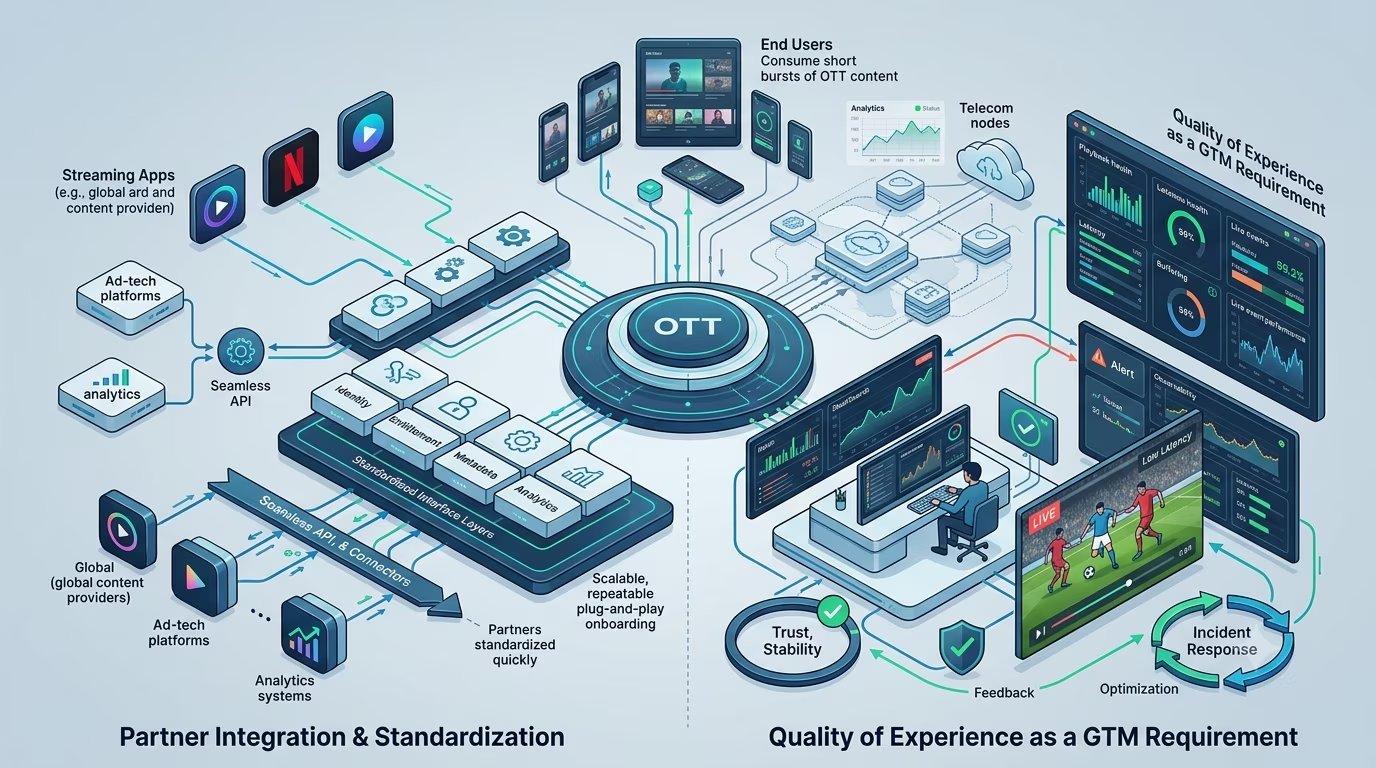
Operators should standardize around:
- A common entitlement and identity layer
- A consistent metadata model and content taxonomy
- A unified OTT analytics framework that captures engagement across the operator experience and partner experiences where possible
- A clear operating handbook for partner onboarding, promotion placement, and customer care escalation
The objective is to reduce integration time for new partners and to prevent the marketplace from becoming operationally unmanageable.
Treat quality of experience as a go-to-market requirement
On mobile, quality failures are amplified by context. Users watch during short windows and abandon quickly when performance degrades. Quality is therefore part of the commercial proposition, especially for live events and premium tiers.
Operators should launch with:
- End-to-end observability across apps, playback, CDN performance, and backend APIs
- Real-time alerting for playback failure rates, startup times, rebuffering, and latency for live profiles
- A live event readiness process with load testing, incident playbooks, and post-event reviews
- Customer communication protocols for incident transparency and resolution
This approach turns performance into a retention lever and protects brand trust.
Define KPIs that connect product performance to telecom outcomes
Mobile OTT is often justified by churn reduction and ARPU lift, but teams frequently measure only classic media metrics. The best operators connect both sets of metrics and manage trade-offs explicitly.
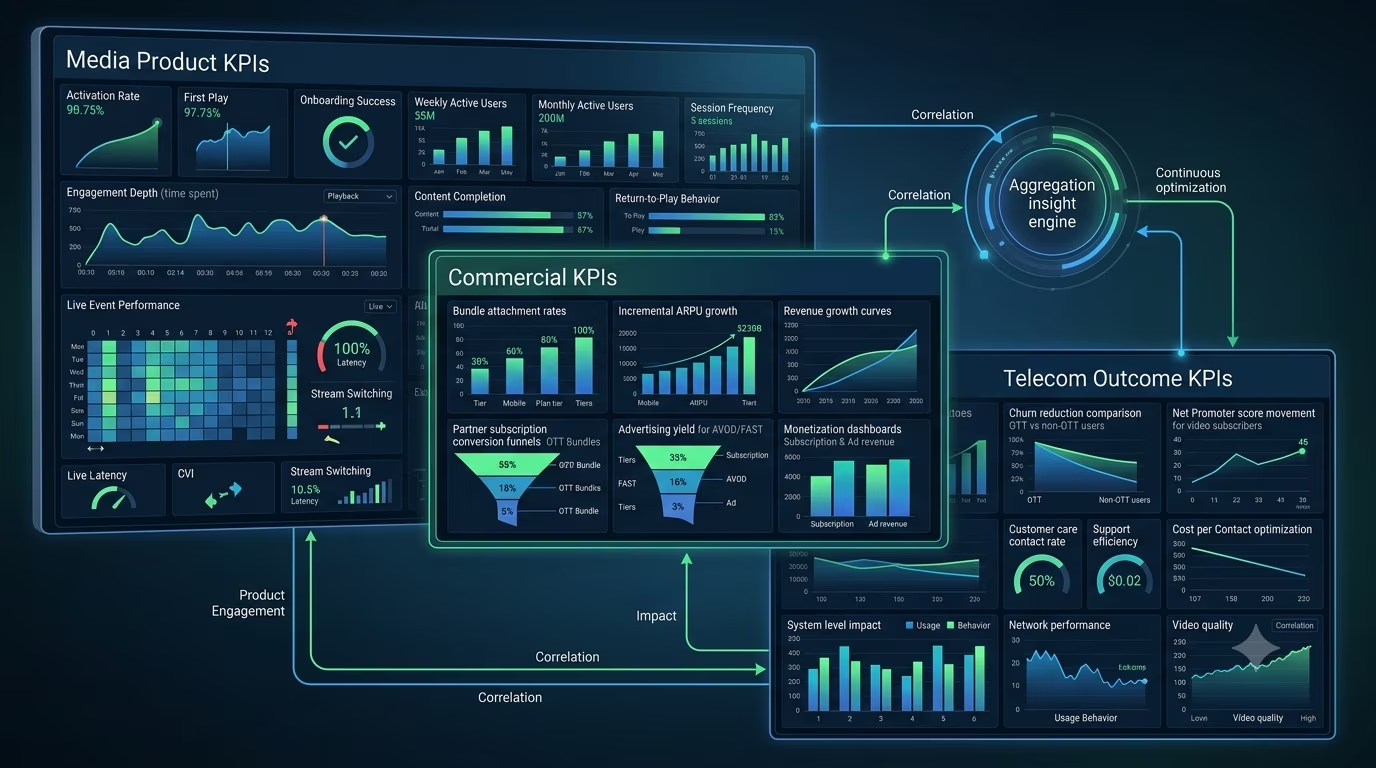
A balanced KPI framework includes:
Media product KPIs
- Activation rate and first-play rate
- Weekly active users and monthly active users
- Session frequency and time spent
- Content completion and return-to-play within seven days
- Live event success metrics including latency compliance and stream switching performance
Commercial KPIs
- Bundle attachment rate by plan tier
- Incremental ARPU contribution
- Partner subscription conversion and retention within bundles
- Advertising yield for ad-supported tiers and FAST
Telecom outcome KPIs
- Churn delta for subscribers with OTT versus without OTT
- Net promoter score movement for video users
- Customer care contacts per thousand viewers and cost per contact
- Network performance metrics correlated with video satisfaction for targeted improvements
Build customer care and service ownership that matches customer perception
Customers do not separate operator services from partner services when something breaks. If a bundle includes multiple apps, the operator still owns the customer relationship.
Operators should design support around that reality:
- A single support entry point that triages issues across operator and partner services
- Clear escalation paths with partners and defined service levels
- In-app self-help that resolves the most common issues quickly
- Refund and compensation policies for live event failures that protect trust
When done well, customer care becomes a competitive advantage, especially in live and premium tiers.
Launch with a phased roadmap that balances speed and depth
The fastest route to market is not always the best route to retention. Operators should launch with a minimum lovable product that is strong where it counts, then add complexity only when the operating model can support it.
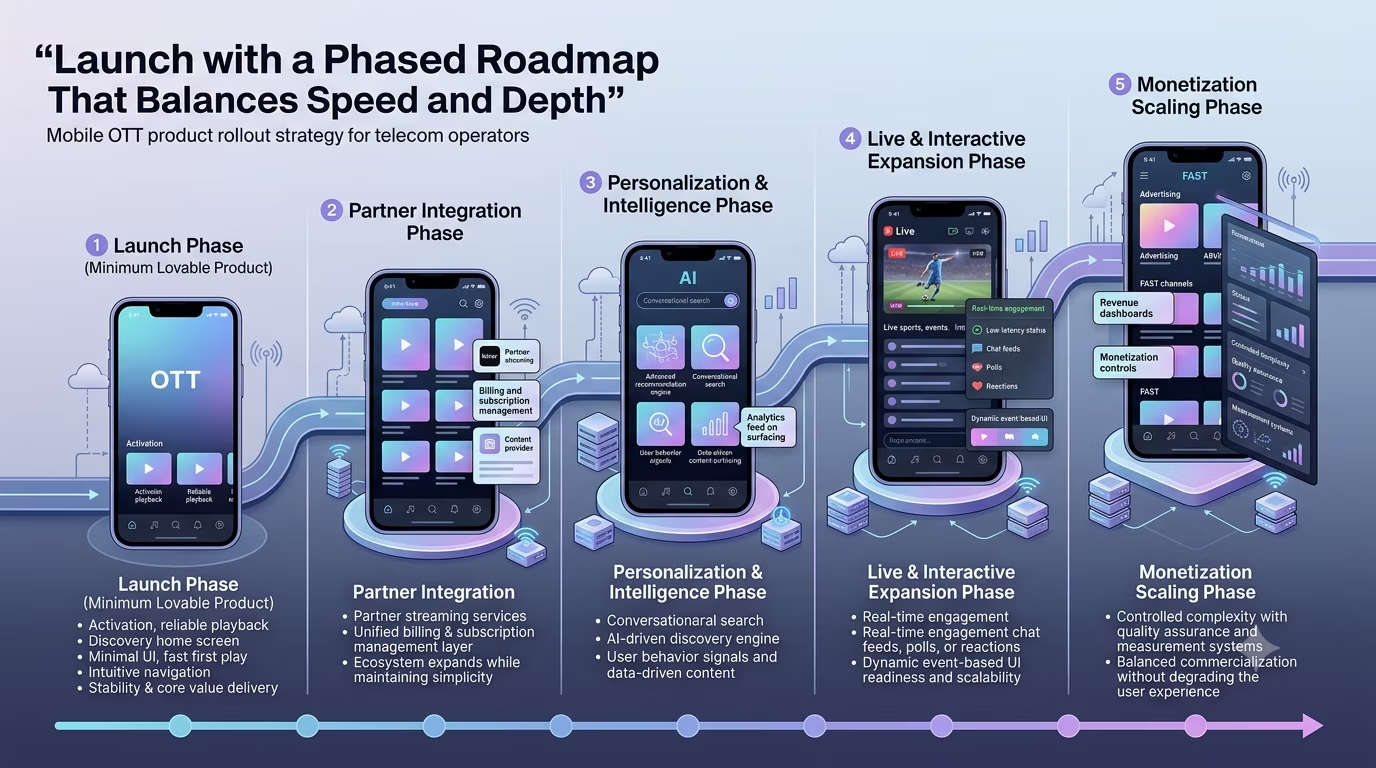
A practical phased roadmap is:
- Launch with clean activation, reliable playback, and a strong discovery home screen
- Add partner services with unified billing and unified subscription management
- Introduce advanced personalization and conversational search when data foundations are ready
- Expand live capabilities and interactive features for sports and events after establishing operational readiness
- Scale advertising and FAST with careful quality and measurement controls
This approach keeps the service credible on day one without locking the operator into a brittle architecture or a support-heavy proposition.
Final Thoughts
Part 4 makes it clear that mobile OTT success depends as much on commercial design as it does on product capability. Even the strongest platform will underperform if the offer is too complex, the value is not visible immediately, or the packaging does not reflect how mobile users subscribe, pause, return, and engage around specific moments. The most effective operators will be the ones that make the service easy to understand, easy to buy, and flexible enough to stay relevant without eroding long-term value.
What stands out most is that packaging, acquisition, activation, habit formation, service quality, and customer care all work together as one system. Operators that win will build a repeatable commercial engine: one that connects OTT performance to telecom outcomes, turns live viewing and super-aggregation into measurable business value, and evolves through phased execution rather than one-time rollout thinking. In that sense, mobile TV becomes a durable strategic layer in the broader customer relationship.