
uC27 Release: Turning First-Time Visitors into Future Subscribers
Quick Summary
With Guest Mode at the center, uC27 gives operators a smarter way to welcome new users while strengthening speed, usability, legacy-device support, and backend readiness across the entire UniqCast platform.
In today’s OTT and IPTV market, growth often begins before a user ever signs in. The first interaction with a service can determine whether a casual visitor becomes an engaged viewer or leaves before discovering its value. With the uC27 release, UniqCast focuses on making that first impression stronger, smoother, and easier to act on. At the heart of the release is Guest Mode, a new way for operators to let users explore selected content and features without the barrier of immediate login. Around that central capability, uC27 also improves performance, strengthens support for older devices, refines security flows, and enhances the backend systems that keep the entire platform fast and dependable.
Why Easier Access Matters Before Subscription
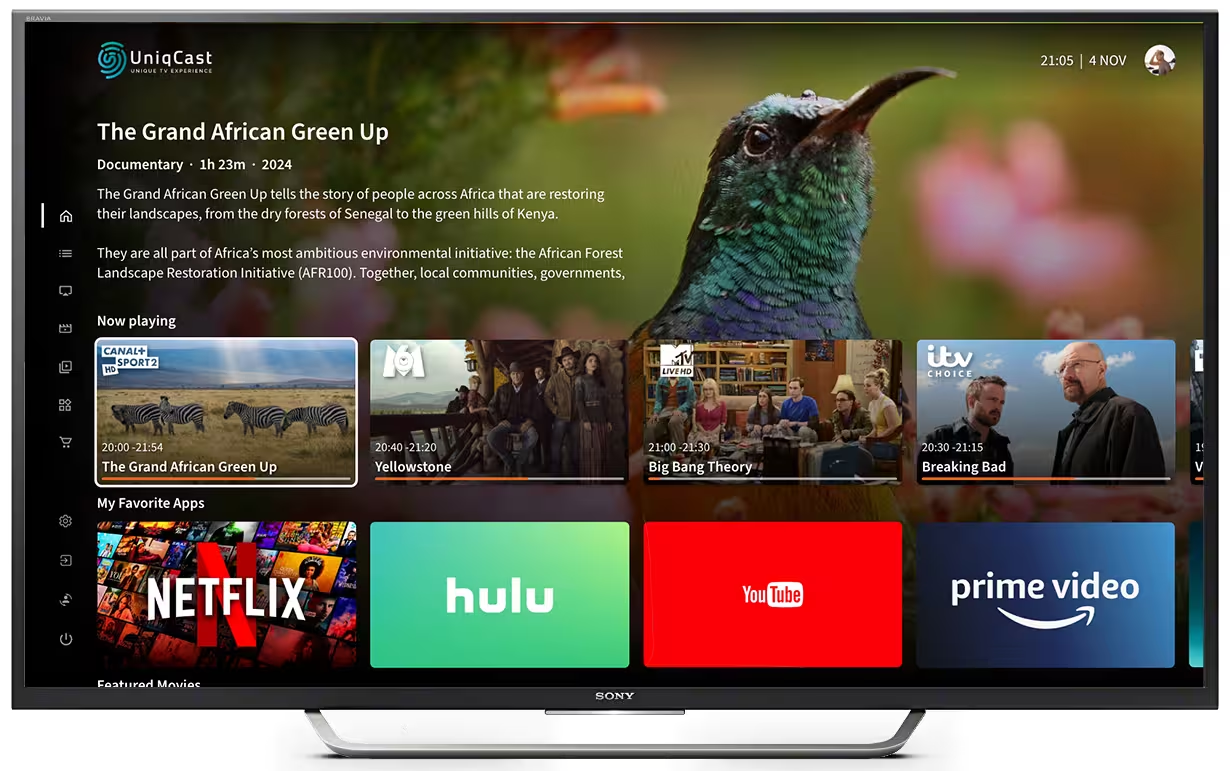
In streaming, accessibility is about how quickly a potential viewer can move from interest to actual experience. The fewer barriers there are between curiosity and first playback, the stronger the first impression becomes. That matters because in OTT, viewers often decide within moments whether a service feels worth their time. When access is easier, operators are widening the top of the funnel, giving the product more chances to create familiarity, trust, and eventually paid intent.
Different services apply this principle in different ways. Some by offering playback in a free tier, others by making discovery and exploration easier before a user is asked to sign in or commit. The latter approach is the one that can be implemented by using Guest Mode introduced with this release.
The broader streaming market has already shown how powerful that principle can be. Tubi, for example, built its growth on a fully open, ad-supported model and said in June 2025 that it had exceeded 100 million monthly active users and surpassed 1 billion hours of viewing time in a single month. That does not make Tubi identical to a subscription OTT service, but it does show that reducing the barrier to entry can dramatically expand reach, strengthen brand presence, and create real commercial upside when the user experience delivers value quickly.
A closer parallel to Guest Mode can be seen in Peacock’s original launch strategy. When NBCUniversal launched Peacock in 2020, it introduced both free and premium tiers, with more than 13,000 hours available in the free tier and a larger catalogue reserved for paid plans. The model was simple: let users experience enough of the service to understand its value, then provide a clear path to upgrade. By August 2025, HollywoodReporter reported that Peacock had grown to 41 million subscribers. That growth cannot be credited to the free tier alone, but the structure reflects the same idea behind Guest Mode: controlled access can be a powerful tool for building recognition, trust, and momentum before asking for full commitment.
The same pattern appears beyond video as well. Spotify has explicitly described its freemium model as a way to let users try the service risk-free while building a larger subscription funnel over time. Today, Spotify says it has 751 million users, including 290 million subscribers, across 184 markets. In other words, accessible entry points are a long-term growth strategy. They help products become familiar faster, encourage repeat engagement, and create a wider path from casual use to paid loyalty.
That is why Guest Mode in uC27 reflects a broader commercial shift in how successful digital services attract users: not by demanding commitment upfront, but by making the first interaction easy, immediate, and compelling. In that sense, Guest Mode is about giving the service a better chance to introduce itself and giving operators a smarter way to turn first impressions into future subscribers.
General Version Highlights
The defining idea behind uC27 is simple: reduce friction and make it easier for users to move from curiosity to commitment. Guest Mode is the clearest expression of that. With platform-wide support across client applications, operators can now allow first-time users to browse a limited set of content and screens before registering or signing in. Instead of facing a hard stop at the login screen, users can experience a lightweight, read-only version of the service and encounter clear prompts that guide them toward full access. It is a practical feature, but also a strategic one. It gives operators a more welcoming entry point, a better way to showcase their service, and a controlled path to improve engagement and conversion among new or casual users.
That same focus on lowering friction continues throughout the rest of the release. uC27 strengthens support for Smart TV and legacy STBs, making the platform an even stronger option for operators who want to extend the life of existing hardware or take a phased approach to replacing older devices. At the same time, the release delivers broad improvements in speed, responsiveness, and scalability, helping applications load faster, navigate more smoothly, and perform more reliably under higher usage. The combined changes significantly improve perceived speed for end‑users and reduce load on backend infrastructure. Security has also been made more user-friendly, with OTP-based PIN reset giving operators a safer self-service option that reduces support effort while improving account protection.
STB App Upgrades
On set-top boxes, uC27 is designed to make the interface feel noticeably quicker and more natural in everyday use. The release reworks how the dashboard and content screens are built and loaded, so users see visual placeholders immediately while content continues loading in the background. The result is a faster-feeling experience from the very first interaction. By combining this with smarter in-app caching and removing outdated delays in interface flows, UniqCast makes the STB app feel more responsive without changing the core viewing journey users already know.
Beyond speed, the release also continues to improve reliability. Playback stability and error handling have been refined for real-world network conditions, while smaller UI and navigation improvements help keep the STB experience aligned with other client platforms. These changes may be subtle on their own, but together they strengthen the sense that the platform is smoother, more polished, and more consistent across day-to-day viewing.
Mobile and Web Upgrades

The same philosophy carries into mobile and web: make the service feel faster, clearer, and easier to trust. Thanks to backend API and data structure improvements, mobile and web applications now benefit from faster data delivery across dashboards, VOD, and EPG screens. Browsing content rails and search results becomes smoother, especially under heavier load, while app behavior is more predictable when users switch networks or return after the app has been running in the background. For users, that means fewer interruptions and less waiting. For operators, it means a more dependable experience across some of the platform’s most frequently used touchpoints.
uC27 also improves account-related flows on mobile and web by bringing in the new OTP-based PIN reset and login attempt restrictions supported by the backend. Authentication and blocked-account scenarios now come with clearer feedback, helping users understand what is happening and what to do next. Alongside that, the release includes smaller visual and interaction refinements, as well as preparatory changes for future enhancements around discovery and operator-specific layouts. In other words, mobile and web apps are faster and better prepared for what comes next.
Smart TV Upgrades
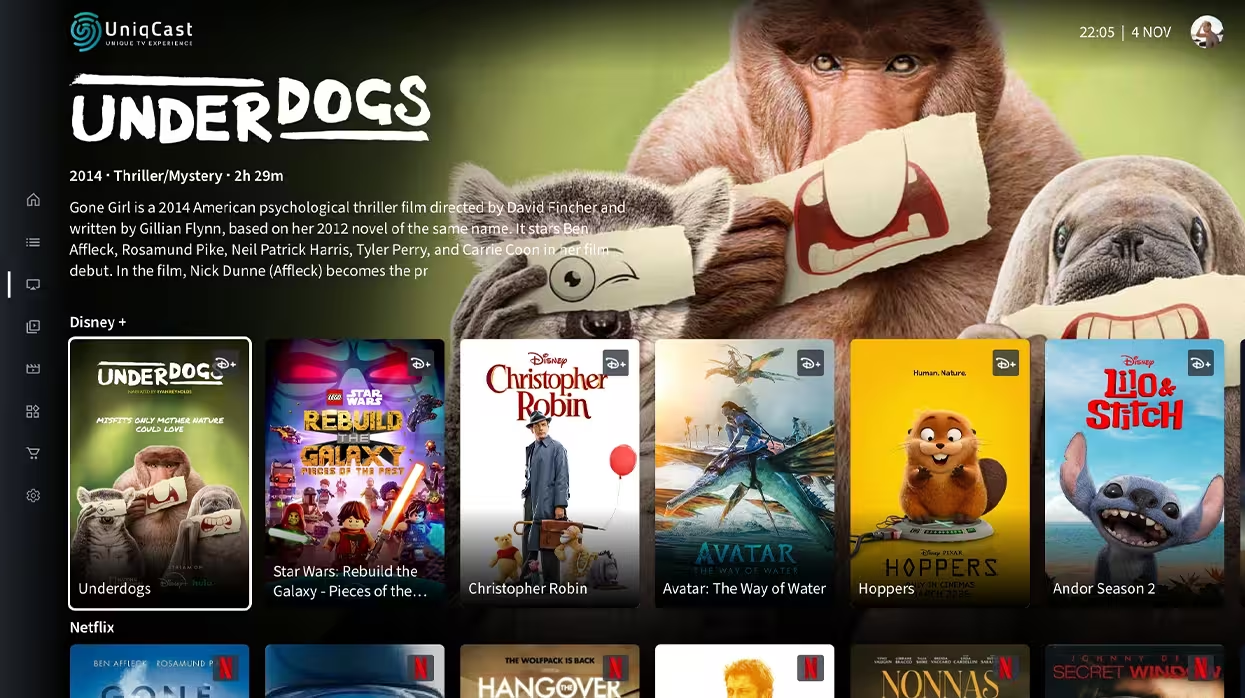
One of the most commercially important parts of uC27 is its continued support for low-performance and legacy devices. The Smart TV application stack has been optimized to run more reliably on lower-end hardware, including older devices still widely used in operator deployments. This is especially valuable for operators who need to improve service quality without forcing immediate hardware replacement. By improving performance on lower-end and legacy devices, UniqCast gives operators far more flexibility when planning upgrades and long-term deployments. For many operators evaluating a platform switch, one of the biggest practical concerns is the installed base of older STBs that simply cannot be replaced overnight. uC27 helps de-risk modernization by enabling a phased transition, so operators can modernize the service layer now, without being forced into immediate, costly hardware investments.
To achieve that, uC27 introduces a range of improvements designed for lower-resource environments. Player behavior has been adjusted for devices with limited CPU and memory, UI rendering has been optimized to reduce resource usage, and specific playback scenarios have been implemented to support VOD and catch-up TV within live player components on older STBs. At the same time, Smart TV applications see broader performance improvements across different manufacturers and model years, along with closer alignment in navigation and playback behavior between Smart TV, STB, and mobile/web clients. The result is a more consistent platform experience across the full device ecosystem.
Backend
Much of what makes uC27 feel faster and more cohesive is powered by backend improvements that users may never see directly, but will immediately feel in the product. The release includes a major rewrite and optimization of the client-facing API layer, along with new optimized data structures for core content areas such as series, episodes, movies, VOD assets, packages, channels, and EPG data. In practical terms, this means faster response times for common UI patterns like dashboards, detail pages, and program grids, while also reducing pressure on primary databases during peak traffic. It is the kind of infrastructure work that quietly improves nearly every interaction across the platform.
The CSMS administration interface has also been modernized, giving operators and internal teams a cleaner, more maintainable foundation for future updates. Easier maintenance, better support for security updates, and more consistent behavior across browsers all contribute to a more stable operational environment. These may be backend-facing improvements, but they matter because they help the platform evolve faster and more reliably over time.
Analytics take another important step forward with uStatia 2.0. By moving fully to a native search stack and introducing a new orchestration service, UniqCast improves analytics performance and simplifies operations while building a more flexible base for future reporting. The release also extends support for content provider analytics across both internal and external catalogues, giving operators broader visibility into how content is being used. That wider view supports better decisions around content strategy, partnerships, and future service optimization.
uC27 also brings more precision to metadata handling. Custom XMLTV tags can now be mapped directly into CSMS EPG event metadata, allowing more accurate categorization of content. This can support better search and filtering, strengthen dynamic catalogue rules, and create more targeted ways to present specific genres or event types in future discovery experiences. At the same time, backend support for OTP-based PIN reset has been further aligned with device management and login attempt restrictions, while authentication flows, entitlement checks, and device provisioning continue to be hardened. Together, these changes help ensure that easier access for users is matched by stronger control and security for operators.
A Release Built Around Better First Impressions
What makes uC27 stand out is not just the addition of a single feature, but the way the release connects acquisition, usability and performance into one coherent platform upgrade. Guest Mode opens the door to a more accessible first experience. Faster apps and smoother navigation make that first experience stronger. Better support for legacy hardware makes it more practical in real operator environments. And the backend improvements ensure that all of it can scale with confidence. With uC27, UniqCast gives operators a better way to turn first-time visitors into future subscribers, while making the entire platform feel faster, safer, and more ready for growth.