The Ultimate Guide to OTT Technology
Quick Summary
2026 Update
For most operators OTT is the default reality, living across smart TVs, mobile and streaming devices, and competing in a market where users have endless choice and very little patience.
That’s why this 2026 Update exists.
This article builds on the 2025 Ultimate Guide as a foundation and refreshes it for what operators are facing right now: mature subscriber markets, subscription fatigue, bigger expectations for discovery and simplicity, and faster shifts in advertising and distribution.
Who this guide is for
This guide is written for IPTV/OTT operators, telcos, and ISPs planning their next platform cycle, whether you’re modernizing a legacy TV service, launching a new OTT product, expanding multiscreen capabilities, or looking for practical ways to differentiate in a crowded market.
What you’ll learn in the 2026 edition
You’ll get a structured view of what to prioritize and why, with a clear operator lens:
- What changed since 2025 and how it impacts product decisions in 2026
- OTT vs IPTV in 2026 (and why most real-world services are hybrid)
- A practical operator opportunity map focused on discovery/UX, monetization, and delivery efficiency
- What premium UX means now, especially on the big screen
- A modern content approach: from “more content” to right content + better packaging + better discovery
- The discovery and engagement tech stack for 2026: metadata operations, intent-based search, AI-assisted experiences, multi-view and sports UX patterns
- A 2026-ready monetization view where hybrid is the default
- Device and distribution strategy for a world where smart TV ecosystems and OS-level discovery shape viewer behavior
- Platform architecture and delivery principles that keep you flexible as business models and partnerships evolve
- 2026 trend watchlist with concrete implications for operators
How to use this guide
You don’t need to adopt everything. The goal is to help you make better trade-offs.
As you read, think in outcomes:
- Are we making it easier to start watching?
- Are we improving content-to-play conversion and retention?
- Are we building a monetization model that fits real households?
- Are we delivering consistent quality across devices without runaway cost and complexity?
If you can answer “yes” more often by the end of your 2026 roadmap planning, your technology choices are serving their purpose and your service will be better positioned to win.
What changed since the 2025 update
The 2025 guide opens with an important reminder: “Technology without a purpose is useless,” and OTT/IPTV technology only matters when it improves real entertainment outcomes for real people. In 2026, that principle becomes even more practical, because the market is shifting from build features to catch up toward build advantage to stay profitable.
From a subscriber race to a value race
In 2025, many services still behaved as if the goal was pure subscriber growth. In 2026, most markets show clear signs of maturity: growth slows, and the winners optimize for profitability, engagement, and average revenue per member. That changes how operators should think about their roadmap:
- Shiny features matter less than activation, retention, and usage depth.
- More content matters less than discoverability and relevance.
- More apps matters less than fewer journeys and fewer clicks-to-play.
Cooperation becomes a competitive advantage
The old model was simple: compete with global streamers by launching your own service, then grow your own base. The 2026 model is messier, but more opportunity-rich for operators: consolidation and cooperation accelerate, and “frenemy” partnerships become normal (bundles, content exchanges, aggregator ecosystems).
Cooperation in the U.S. increasingly centers on DTC bundles and third-party aggregators, with telcos and retailers bundling competing services and aggregator platforms pulling a meaningful share of new subscriptions. For IPTV/OTT operators, this is a green light: owning unified discovery + unified billing + unified customer care is once again a real differentiator.
Advertising is no longer just AVOD
In 2026, advertising shifts from experimentation to execution: buying and selling becomes more accountable, more AI-assisted, and more outcomes-driven across platforms.
Industry voices also point to the mechanics behind that shift:
- better TV viewing stats to reduce waste and find true incremental reach,
- stronger push for standardized measurement and verification, and
- a clearer ad related business case for CTV (smart TV).
For operators, this changes the question from “Do we add ads?” to “Can we run CTV-grade advertising with quality, transparency, and measurable outcomes?”
AI moves from features to workflows
In 2026, the bigger change is operational: agentic AI starts replacing repetitive workflows across streaming businesses, thus speeding up decisions and freeing teams from time-sink tasks.
AI is not only “better recommendations.” It’s also faster onboarding, better metadata, better QA, smarter scheduling, better customer care, and more efficient ad ops, all of which show up on the P&L.
A practical reality check for operators
The biggest risk with AI in OTT is not under-adoption, but misalignment.
In many operator environments, AI initiatives often fail not because models don’t work, but because decision accountability and strategic AI directions and goals are unclear.
In 2026, successful AI adoption will depend less on model sophistication and more on whether operators have clear ownership and KPIs tied to real business outcomes.
Live sports become even more strategic
In 2026, live sports will become one of the most important battlegrounds for both subscriptions and advertising, because it reliably concentrates attention.
AlixPartners flags sports as a forcing function for cooperation and bundling as rights fragment and audiences want simpler access. And advertisers continue to show premium appetite for major sporting events, with major events pulling strong demand for streaming and digital inventory.
Although sports rights remain expensive and fragmented, we can expect that long-term differentiation will come from experience, not exclusivity alone. Operators that invest in discoverability, highlights, continuity, and reliability often outperform competitors with broader rights but weaker UX.
For many markets, the winning strategy is not owning everything, but delivering the best possible experience around the rights you do have.
The 2026 operator opportunity map
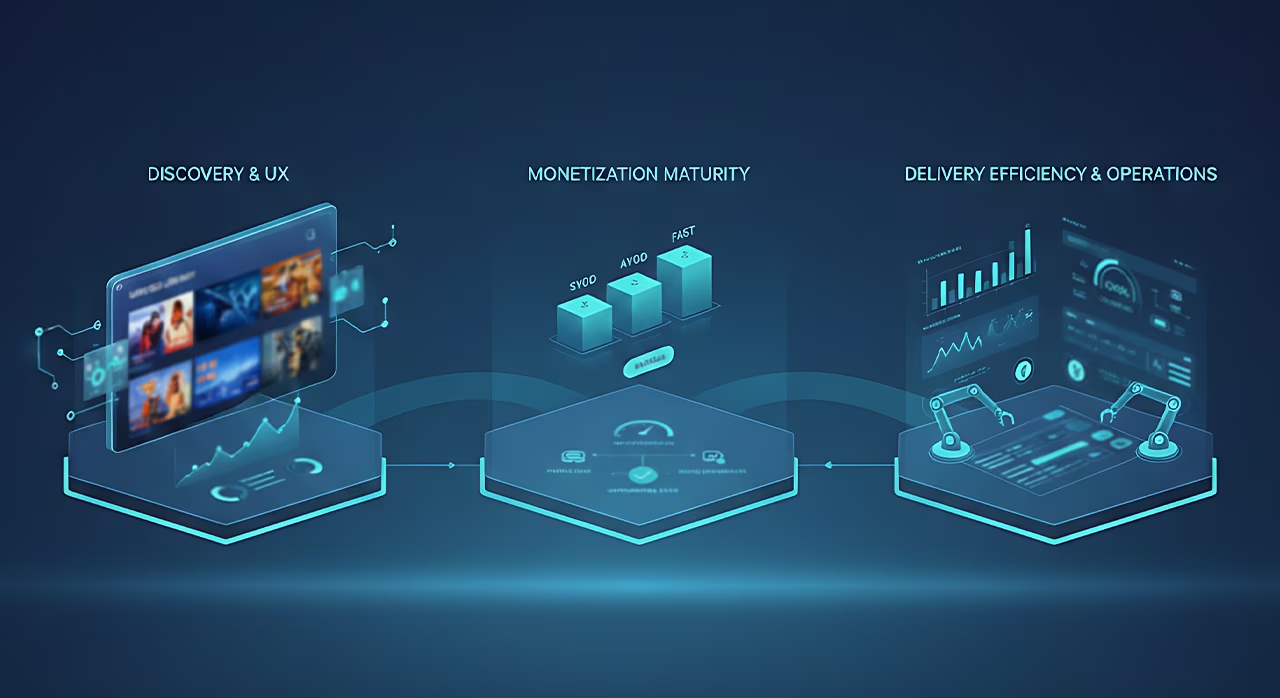
The 3 battlegrounds where operators can win in 2026
Battleground A: Discovery and UX (turn attention into viewing)
The competitive edge moves from having features to reducing friction and improving conversion.
2026 opportunities for operators
- Unified discovery across content sources (own catalog + partner catalogs): operators are structurally well-positioned to make finding something to watch easier than app-hopping, especially in a bundling/aggregation era.
- AI-assisted discovery that’s actually usable: not just recommendations, but search that understands intent and context and operational tooling that keeps metadata clean and current (more on agentic workflows later in the article).
- Sports highlights: live that behaves like VOD (replay, highlights, categorized events), and the best operators make live discoverable, not just available.
What to measure
- Time-to-content (home screen to first play)
- Search success rate
- Content-to-play conversion by row/rail
Battleground B: Monetization maturity (hybrid is the default)
The monetization question is no longer SVOD or AVOD? It’s: how do we build a portfolio (SVOD + AVOD + FAST + bundles) that maximizes reach and ARPU while minimizing churn? Market maturity and bundling trends make this essential.
For a deeper look: OTT monetization models.
But be aware! Hybrid monetization only works if teams can operate it. Hybrid monetization is powerful, but it introduces real operational complexity. In many operator environments, the bottleneck is not user willingness to pay, but the ability to manage pricing logic, entitlements, CRM integration, device behavior, and customer support consistently.
In 2026, the most successful monetization strategies will be those that teams can clearly explain, reliably operate, and quickly troubleshoot.
2026 opportunities for operators
- Bundles as a churn-reducer and acquisition lever: cooperation and aggregation are scaling and operators can package value in ways standalone services struggle to match.
- CTV advertising that is outcomes-ready: ad leaders expect 2026 to be more execution-focused and outcomes-driven, supported by AI-powered cross-platform workflows.
- Better signals, less waste: improved privacy-safe TV data and measurement practices are repeatedly called out as keys to unlocking more spend and better performance.
What to measure
- ARPU by segment and bundle
- Ad fill rate, viewability/completion, and business outcomes
- Churn by plan type (standalone vs bundle)
Battleground C: Delivery efficiency and operations (quality at lower unit cost)
In 2026, flexibility becomes tied directly to efficiency: you need a tech stack that can evolve fast and deliver reliably while controlling costs.
2026 opportunities for operators
- Agentic AI for operations: replacing repetitive workflows, accelerating decisions, and reducing operational burden is a major 2026 theme in industry predictions.
- Infrastructure pragmatism: as teams embed AI deeper into operations, the industry conversation includes complexity, outages, and unpredictable cloud costs, pushing some organizations toward more transparent, workload-fit infrastructure choices.
- Efficiency and latency become managed KPIs: media delivery voices point to tracking cost (and even watts) per delivered pixel and treating latency budgets as measurable, engineered constraints, especially for live sports and FAST distribution.
What to measure
- Cost per hour streamed (and by device)
- QoE: startup time, rebuffering, error rate
- Live latency (by event tier)
How to use this map
- If your churn is high - start with Discovery & UX (Battleground A)
- If your ARPU is flat - prioritize Monetization maturity (Battleground B)
- If your unit economics hurt - focus on Efficiency & operations (Battleground C)
User experience in 2026: what premium now means
In the 2025 guide, we make a point that still defines the OTT/IPTV race: UX has become an increasingly important part of OTT video, because users compare every service to the best experiences they already know.
In 2026, that baseline has tightened.
Speed, clarity, and fewer decisions
A premium streaming experience means less friction:
- Fast time-to-content (launch, find, play)
- Predictable navigation (users always know where they are and how to get back)
- Low mental load (the UI doesn’t ask users to work to watch)
- Reliability under real conditions (busy home Wi-Fi, older devices, mixed household usage)
People have a finite amount of entertainment time, and streaming providers are increasingly competing not only with other services, but with hyperscale social video platforms optimized for engagement and discovery.
Operator takeaway: treat UX as an engineered outcome, not as a design layer. A beautiful interface that’s slow, confusing, or inconsistent is not premium.
Big screen is still the main stage, but UX is evolving
In 2026, the big-screen experience is even more influenced by the platforms it runs on, because smart TV / streaming app providers are actively redesigning the home experience to reduce friction and aggregate content.
Two recent examples show where user expectations are heading:
- Fire TV’s app redesign focuses on more intuitive navigation, category tabs (movies, shows, sports, live), aggregation across subscriptions, and a claimed responsiveness boost, explicitly addressing frustrating performance and discoverability issues.
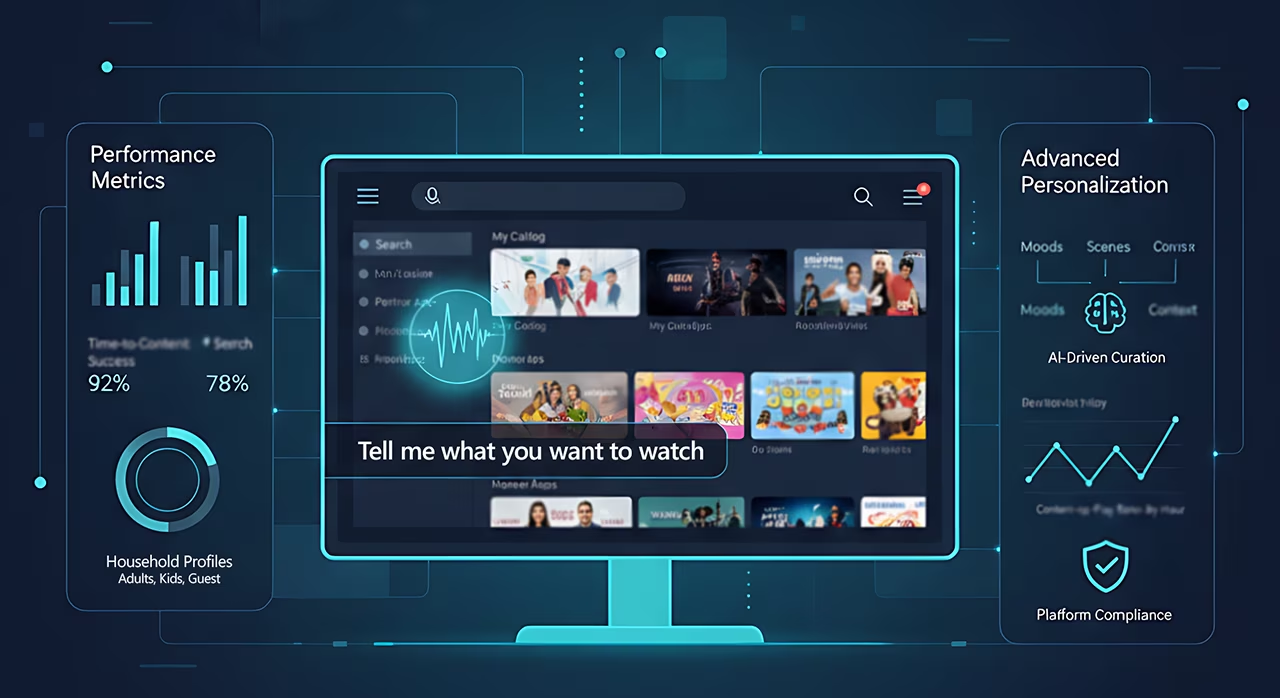
- Google TV’s Gemini upgrades push toward voice-driven control and richer, more conversational exploration that blends search, curation, and contextual deep dives.
One of the noticeable signals for 2026 is the shift toward always-on TV experiences. Television is no longer treated as a passive, session-based device, but as a continuous smart surface aware of user presence, voice interaction, context, and environment.
With this shift, AI is no longer primarily an application feature. Content discovery, voice interaction, and contextual assistance increasingly happen before users even enter an operator app.
For operators, this fundamentally changes UX assumptions. Users expect simplification, immediacy, continuity, and relevance without explicit actions like app launching or repeated navigation. In 2026, “premium” increasingly means the service is already there when the user looks at the screen.
The uncomfortable question is: if discovery and interaction start before your app opens, are you still designing the experience or just reacting to it?
Operator takeaway: your product is the combined journey of app screens, remote control behavior, voice, and content aggregation. In 2026, “premium” means:
- your app feels native inside the OS ecosystem,
- your content is discoverable through the app layer,
- your navigation is resilient even when the app tries to help.
Discovery is the differentiator
In 2026, discovery becomes the differentiator because content libraries keep expanding while attention stays fixed. This is where operators can win, especially in a bundling and aggregation era by becoming the place where viewers start, even when playback sometimes happens across multiple partner apps.
What changes in 2026 is how discovery is delivered:
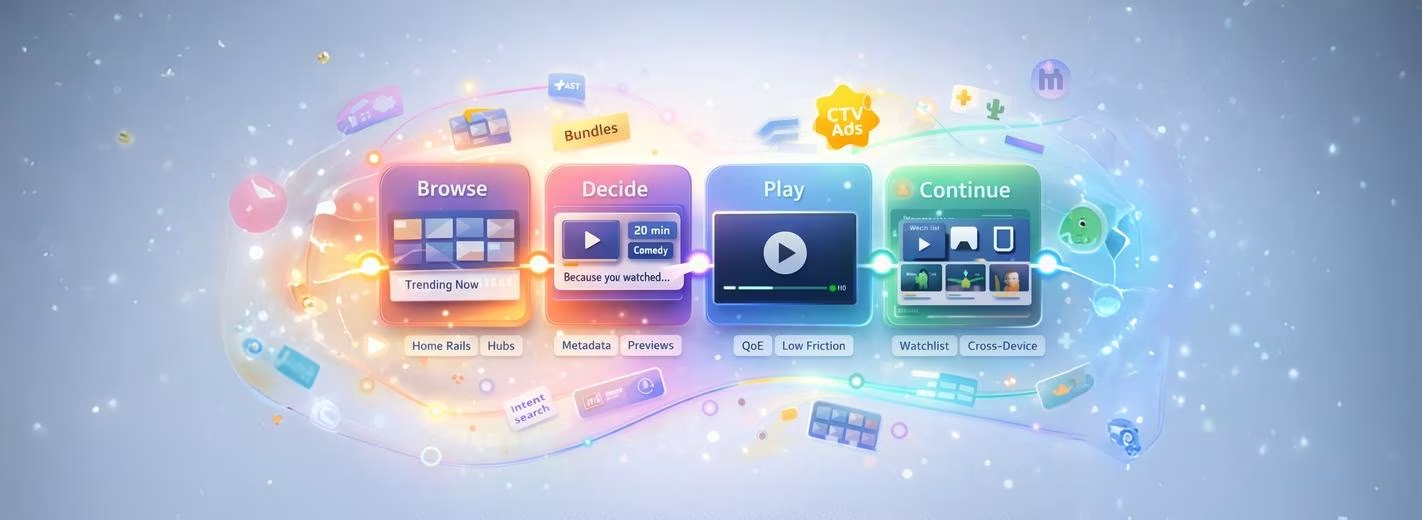
- From search box to intent-based discovery: users increasingly want to describe what they want (“something upbeat, 20 minutes, not too serious”) rather than type titles.
- From metadata-only to multimodal discovery: discovery improves when services can use richer signals such as mood, scenes, moments, and contextual understanding.
- From static rails to dynamic journeys: homescreens adapt by time of day, household profile, device, and current trends.
These shifts are closely connected to AI adoption. Operators should treat these capabilities as a discovery system that continuously improves conversion from browse to play.
Operator takeaway: The goal is higher content-to-play rate and less browsing fatigue.
Personalization has to work for households, not just individuals
Streaming UX isn’t used by a single user. It’s used by a household and often shared across profiles, devices, and viewing contexts.
A 2026-ready UX should support:
- Profile depth (adults, kids, guests, shared living rooms)
- Continuity (resume across devices, consistent watchlist behavior)
- Safe personalization (clear controls; avoid “creepy” moments; transparent why-recommended cues)
- Local relevance (language, cultural context, and region-specific tastes)
The competitive pressure here is real: social platforms are training audiences to expect hyper-relevant feeds, optimized continuously for engagement. OTT operators don’t need to copy the infinite scroll model, but they do need to bring the same seriousness to personalization quality.
Operator takeaway: personalization is only valuable if it reduces time-to-content and increases satisfaction. Otherwise, it’s noise.
Accessibility and inclusivity move from compliance to retention
In 2026, accessibility should be treated as a core UX capability with direct impact on usage and retention, especially for multi-generational households.
Practical premium UX requirements:
- Reliable subtitle handling (size, background, positioning, persistence)
- Audio enhancements (dialogue clarity options)
- Multi-language audio/subtitle workflows that don’t break the viewing flow
- Clear parental controls that are usable, not only available
Operator takeaway: if users can’t comfortably watch, they won’t watch, no matter how good the content is.
UX measurement: make it operational, not subjective
To shape IPTV/OTT services in 2026, operators should measure UX the way they measure network quality using outcomes.
Recommended UX KPIs:
- Time-to-content (app open to first play)
- Search success rate (search to play within X minutes)
- Browse-to-play conversion (home rails, category pages, sports hub)
- Abandonment points (where users drop before playback)
- Repeat viewing triggers (continue watching, watchlist usage, next-episode start)
- QoE-linked UX (startup time, rebuffering, playback errors by device type)
Important note: If a metric doesn’t change decisions, it’s not a KPI.
Metrics only create value when they actively shape roadmap decisions. In 2026, operators should regularly ask which features would be deprioritized, redesigned or removed based on UX, QoE, or monetization data, not only which new ones to add.
Measuring without acting creates dashboards, not better products.
A simple way to test this: when was the last time a metric forced you to stop, delay, or remove a feature users already had, not just the one you were planning to build?
Platform-driven quality enforcement increases
In 2026, quality will no longer be evaluated only by users. Platform owners and major content providers increasingly enforce certification, requiring specific hardware performance, stability, and compliance benchmarks through automated testing, telemetry, and device-level monitoring.
This makes QoE not just a UX concern, but a distribution and partnership requirement. Poor quality increasingly limits reach, prevents application or content visibility and reduces platform support and long-term maintainability.
In many cases, services won’t fail loudly. They’ll simply stop being promoted, surfaced, or fully supported - long before users complain.
Are you sure you would even notice when that starts happening?
Content strategy in 2026
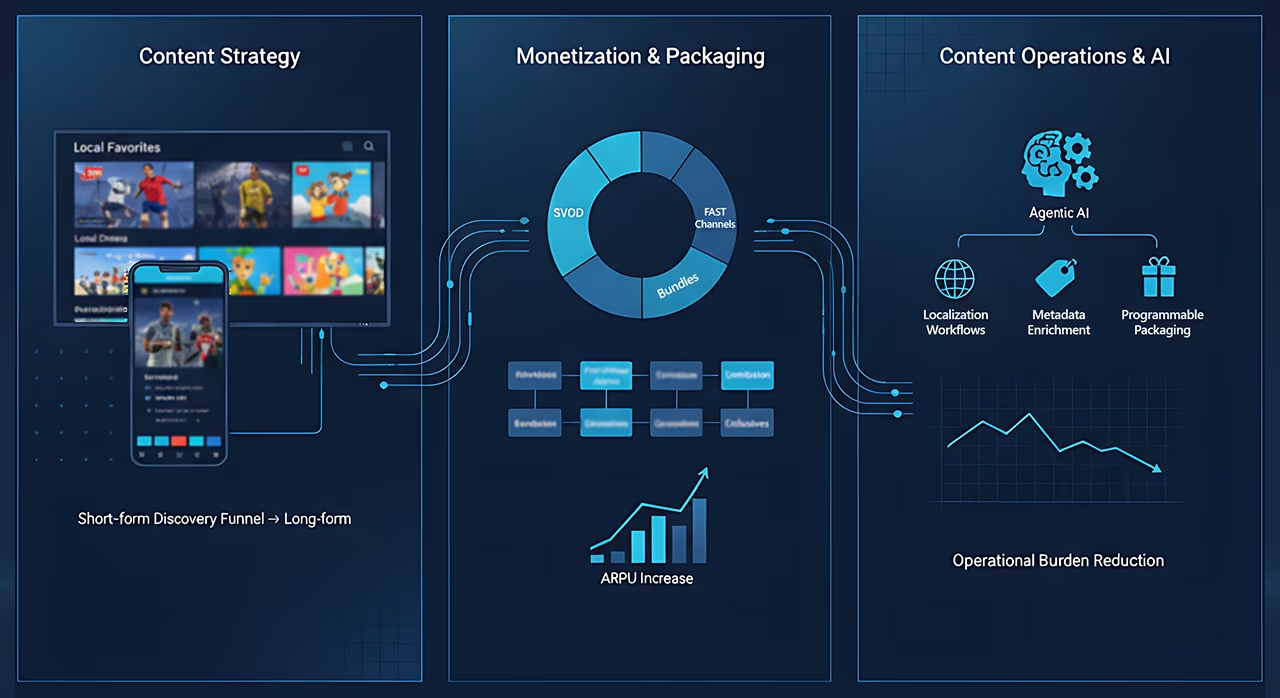
Content is the main focus of OTT services, and experience and technology only matter insofar as they help users find and enjoy that content.
In 2026, the content conversation shifts from
How do we add more?
to
- How do we make the right content easiest to discover?
- How do we package it so it fits real viewing habits and budgets?
- How do we turn live and premium moments into ongoing engagement and monetization?
Attention is scarce, libraries are infinite
Most markets now face choice overload. Viewers don’t just browse competing streaming services, but they also spend massive attention on social video and creator-led platforms optimized for habit-building.
That’s why library size alone is less defensible as a strategy. The winners build a content plan that is:
- purposeful (clear editorial identity),
- discoverable (metadata and UX built around intent),
- programmable (can be packaged into bundles/tiers/channels),
- and operationally sustainable (rights, localization, and marketing workflows that scale).
Local content as the operator advantage
Global services are strong on scale, but often weak on local nuance.
Where operators can build a significant advantage:
- Local language strength: local drama, comedy, news, kids, and cultural programming that creates habitual viewing.
- Local sports and local leagues: content that global platforms may not prioritize but that deeply matters in-region.
- Local discovery and editorial curation: humans + data, tuned to local tastes, not global averages.
Local content only becomes an advantage if it’s easy to find. That’s why content strategy and discovery strategy must be planned together (metadata, rails, hubs, search intent).
Exclusivity still matters
In 2026, exclusivity is still valuable, but it broadens beyond full shows and movies into formats and moments:
- First window or early window access (even if temporary)
- Eventization (premieres, finales, live episodes, live Q&As)
- Companion exclusives (behind-the-scenes, cast clips, alternate angles)
- Highlights and best moments packaging, especially for sports events
For sports in particular, fragmentation and bundling pressure are pushing services to compete not only on season-long rights, but also on how well they deliver moments (highlights, clips, event-driven access).
Operator move in 2026: when full exclusivity is expensive, aim for the best packaged access, the best discovery, the best experience around the content you can get.
Live content in 2026: treat it like a product
In 2026, operators should go one step further and design live as a product with intentional UX
- Live collections by genre (sports, news, events)
- Clear “What’s happening now” plus “What’s coming next”
- Instant catch-up, restart, key moments, and highlight rails
- Post-live lifecycle: replay, condensed versions, “best of” clips
This connects directly to monetization too: live and sports are increasingly central to streaming strategies, and industry analysis continues to position sports as a critical battleground for both subscriber growth and cooperation models.
Short-form, vertical video, and micro-formats
A major 2026 content shift is that short-form video formats are moving inside traditional streaming apps, not only living on social platforms. Disney+ has announced a personalized vertical video feed for mobile in 2026. Reporting also points to Netflix testing similar vertical feeds to drive engagement.
In parallel, micro-formats like micro dramas are drawing significant investment and revenue attention, with dedicated apps scaling the model through subscriptions, in-app purchases, and ads. And at the major-event level, FIFA selecting TikTok as a preferred platform for 2026 World Cup video content underscores how important short-form distribution and creator ecosystems are for attention, especially among younger viewers.
What this means for operators
- Short-form can be a discovery funnel for long-form: highlights, top scenes, recaps, trailers, and “what to watch next.”
- It can strengthen sports and news: fast clips increase daily opens and session frequency.
- It can become a habit layer: browse 2 minutes, decide what to watch, then go big screen.
Key rule: short-form only helps if it’s connected to clear next actions (play full episode, watch live, add to watchlist, follow a series/team).
FAST evolves
FAST in 2026 matures toward thematic cohesion, editorial vision, and creator content rather than random libraries stitched into generic channels.
Operator opportunity
- Build FAST channels with a point of view (local lifestyle, regional music, kids learning blocks, nostalgia, true crime, home & cooking).
- Use FAST to create sampling paths into SVOD (promote premium series, upsell seasonal passes).
- Treat FAST as an acquisition and engagement layer, not only an ad revenue addition.
Content operations become a competitive advantage
Content operations (metadata, localization, packaging) determine how quickly you can adapt and monetize.
This is where the shift toward agentic AI and workflow automation matters, because it can reduce the friction of running large libraries and multi-partner catalogs, helping teams keep discovery accurate and experiences consistent at scale.
Operator move: treat metadata and packaging as a product capability, not as a one-time ingestion task.
Discovery & engagement tech stack
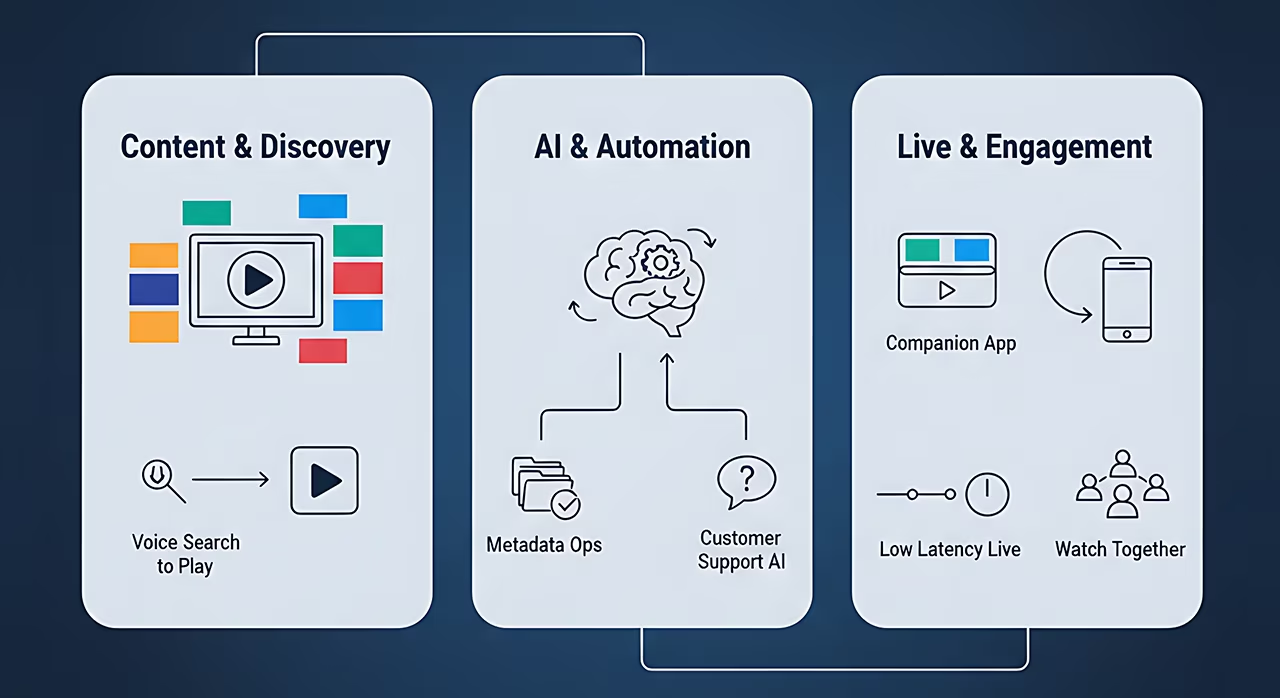
Discovery and engagement are treated as the practical make-or-break layer: better metadata, smarter previews, content enhancement, companion mode, voice assistants, and social features are what turn a library into something people actually watch.
In 2026 the stack evolves. Discovery is no longer just recommendations + UI rails. It becomes a system that combines:
- content understanding (scene/moment-level metadata),
- intent understanding (what the viewer means, not just what they type),
- experience surfaces (TV OS, voice, mobile, second-screen, sports hubs),
- and workflow automation (so the system stays accurate and fresh at scale).
Below is what that stack looks like and how operators can use it to win.
Content enhancement & metadata ops
OTT services can improve engagement through content enhancement technologies: better metadata, stronger previews and trailers, real-time content analysis, and enrichment that helps people decide faster.
In 2026, the major shift is granularity: discovery is increasingly driven by moments, not titles.
What content enhancement means in 2026
Operators are moving beyond basic EPG/VOD metadata (title, synopsis, cast) into:
- Moment-based navigation
- chaptering, skip to key moments, top scenes, best goals, best plays
- auto-generated highlight rails after live events
- Smarter previews
- multiple trailer variants per audience segment (sports fans vs casual viewers)
- scene-based preview thumbnails that reflect what the user cares about (action, comedy beats, cast)
- Dynamic packaging
- content grouped into watch intents (20-min comedy, family night, late-night comfort)
- seasonal and event-driven hubs (tournament weeks, award season, holidays)
These are direct conversion tools: they reduce browsing fatigue and increase content-to-play.
The hidden differentiator: metadata operations (MetaOps)
As catalogs become hybrid (owned + partner + FAST + DTC bundles), metadata operations become a real competitive capability. If metadata is late, inconsistent, or messy, discovery fails, especially when aggregation is part of your strategy.
A 2026-ready MetaOps practice includes:
- automated ingestion + validation (detect missing fields, mismatched artwork, broken rights windows)
- standardized tagging rules (genres, sports taxonomy, kids metadata, language variants)
- a quality loop: search logs → “no result” queries → fixes → measurable uplift
Operator takeaway: Treat metadata like product infrastructure. In 2026, “great UX” depends on whether your metadata supply chain is fast and reliable.
AI in OTT: from recommendations to intent and agentic workflows

In 2026, AI expands in two directions:
- viewer-facing intent discovery, and
- operator-facing workflow automation (agentic operations).
Viewer-facing AI: intent discovery becomes the new default
The bar for search is rising quickly because TV platforms themselves are teaching users to expect conversational, context-rich experiences.
At CES 2026, Google previewed Gemini-driven upgrades for Google TV aimed at making TV more helpful through improved discovery and voice-driven control and moving beyond simple voice search into richer interactions.
Coverage also highlights voice control for TV settings (e.g., “I can’t hear the dialogue,” “the screen is too dim”), a signal that hands-free, no-menu-diving UX is becoming standard on the biggest screen.
For OTT/IPTV operators, this shifts expectations:
- users will increasingly try natural language (“something funny, not too long, like X but lighter”)
- and they’ll expect answers that are visual and actionable, not a list of titles.
What to implement (practical 2026 path)
- semantic search (understands meaning, not keywords)
- “ask to find” journeys (intent → curated options → play)
- explainable recommendations (“because you watched…”) to build trust
- multilingual discovery (especially vital for operators with diverse audiences)
Agentic AI for operators: AI that removes work
The operational side is where AI often delivers the fastest ROI. Industry coverage in early 2026 points to agentic systems and roadmaps designed to scale AI execution with interoperability and stability, especially in advertising workflows.
Translated into OTT operations, the highest-value agentic use cases typically start here:
- metadata + tagging automation (with human review for premium content)
- QA and compliance checks (audio/subtitle presence, loudness, blackout rules)
- customer care deflection (issue triage, “why can’t I watch this?” resolution)
- content ops acceleration (faster localization workflows, highlight creation, synopsis generation)
Operator takeaway: In 2026, AI is also the engine that keeps your discovery layer clean, current, and scalable.
Companion mode, continuity, multi-view, and low-latency live
In 2026, companion mode evolves into a core sports and live strategy, powered by multi-view and lower latency.
Multi-view becomes a mainstream expectation for sports
Multi-view is no longer experimental; major platforms treat it as a marquee sports feature.
- YouTube TV’s official help documentation describes multi-view as watching up to four channels simultaneously on one screen.
- DirecTV rolled out its own multi-view feature to let users watch up to four channels at once (with curated mixes).
- YouTube continues to refine TV UX and multi-view experiences in its living-room app updates.
Operator opportunity: Multi-view is an engagement multiplier and a packaging lever:
- include it in premium sports tiers,
- tie it to event weekends,
- bundle it with advanced stats, alternate audio, or premium camera angles.
Low latency becomes a product requirement
Live sports streaming expectations are rising sharply going into 2026, with industry commentary pointing to more streaming rights, more tentpole events, and heightened viewer expectations.
Streaming Media’s 2026 predictions explicitly call out sub-3-second latency becoming widely adopted for sports and interactivity, enabling new models like premium multi-view packages and commerce or betting experiences.
This matters because low latency enables:
- real-time interactivity (polls, chat, synchronized reactions)
- low-friction “watch and do” flows (merch drops, instant offers)
- second-screen sync (stats and overlays that match what’s on TV)
Operator takeaway: If sports is strategic in your market, plan latency as a product decision.
Continuity still wins households
Even with all the new live features, the fundamentals remain powerful:
- start on mobile, continue on TV
- single watchlist across devices
- consistent “continue watching” logic
- remote/phone-as-controller patterns where appropriate
Social and community features
Community features are becoming more crucial in 2026 because of two main factors: the growing competition for user attention from creator-driven platforms, and the need for streaming services to find new ways to boost retention that go beyond simply acquiring more content.
Social features that work in 2026
Not every service needs social media like TikTok. For operators, the most effective social features tend to be lightweight, event-driven, and optional:
- Watch together (synchronized viewing) for events and sports
- Reactions + quick chat (keep it simple; don’t bury playback)
- Shareable moments (highlights, best scenes, favorite clips)
- Community rails during live events (most watched right now, trending in your city/region)
The key design rule: social should reduce friction, not add it
A social layer should help the user answer:
- “What should we watch right now?”
- “What’s everyone watching?”
- “What did I miss?” (highlights, recaps, top moments)
If it doesn’t improve one of those outcomes, it risks becoming clutter.
Operator takeaway: Community features are most powerful when they’re tied to moments (sports, finales, local events) and fed by your discovery system.
Monetization in 2026

There is no single monetization winning model. The winning strategy is a monetization portfolio, designed around different willingness-to-pay segments, different content types (especially live), and different distribution realities (bundles and aggregation).
AlixPartners’ 2026 M&E predictions describe a market entering maturity, with OTT growth cooling and partnerships/bundles becoming a bigger part of how streaming is sold and discovered. That shift pushes operators toward hybrid offers that maximize reach and revenue per household.
SVOD + AVOD + FAST
In 2026, “subscription or ads?” is no longer the right question. Operators are increasingly successful when they treat monetization like a portfolio with clear roles:
SVOD: still essential, especially for premium and sports, but must be packaged smarter
SVOD remains the anchor for premium content and predictable revenue, but in a mature market it needs stronger packaging:
- tiers that map to real viewing value (premium, family, sports, multi-room, UHD, multi-view)
- short passes (tickets) for event periods (tournament month, holiday bundle, weekend sports add-on)
- bundles that simplify household decisions (less churn through “more included value”)
Analyst and industry commentary continues to highlight bundling as a platform strategy, especially for operators who can combine connectivity + TV + partner OTT services into one proposition.
AVOD: an access tier that grows audience and creates upgrade paths
AVOD works when it’s positioned as a deliberate on-ramp:
- offer free or low-cost access to broaden reach (especially on mobile and smart TVs)
- upsell to ad-light or ad-free tiers with clear value differences (download, premium premieres, sports features)
- use AVOD to reduce churn risk (downgrade path instead of cancellation)
In 2026, AVOD’s effectiveness increasingly depends on ad experience quality (frequency control, repetition reduction, and consistent delivery across devices).
FAST: a habit layer and acquisition engine
FAST is most effective for operators when it has a purpose:
- habit-building “lean-back” viewing (news, music, lifestyle, nostalgia, kids blocks)
- sampling funnels (promote premium VOD/series via smart scheduling and tune-in)
- local differentiation (regional genres, local events, curated themes)
Operator move: design FAST with an editorial identity and clear conversion paths (watch into follow into discover into upgrade).
CTV advertising grows up
In 2026, the market expects CTV-grade advertising that is scalable, measurable, and interoperable.
Standardization is accelerating and it matters to operators
One of the biggest 2026 shifts is active industry work to standardize CTV ad formats and experiences. IAB Tech Lab’s CTV Ad Portfolio and Guidance is explicitly aimed at ecosystem alignment.
Why operators should care:
- it reduces bespoke integration work with each partner
- it improves creative compatibility across devices/players
- it supports more predictable QA, measurement, and monetization performance
For ad monetization initiatives in 2026, whether you're starting fresh or updating an existing setup, prioritizing industry standards offers a tangible competitive edge.
Commerce and shoppable TV
In 2026, commerce is one of the most tempting areas, because it promises new revenue beyond subscriptions and ads. But it only works when it’s implemented with clear use cases and low friction.
Where it tends to work best for operators
- Sports and live events: merch drops, team gear, limited-time offers
- Lifestyle genres: cooking, home improvement, fashion, travel
- Kids and family: carefully designed, parent-controlled commerce (high sensitivity)
Practical 2026 implementation patterns
- QR-driven flows that don’t interrupt viewing
- “Shop later” saves (watchlist-like commerce) to reduce pressure during playback
- Contextual placements tied to content moments (not random overlays)
- Clear attribution measurement (otherwise it stays a novelty)
Operator move: keep commerce optional and additive. Premium UX still wins; shoppable features must never feel like they hijack the viewing experience.
Device portfolio and distribution strategy
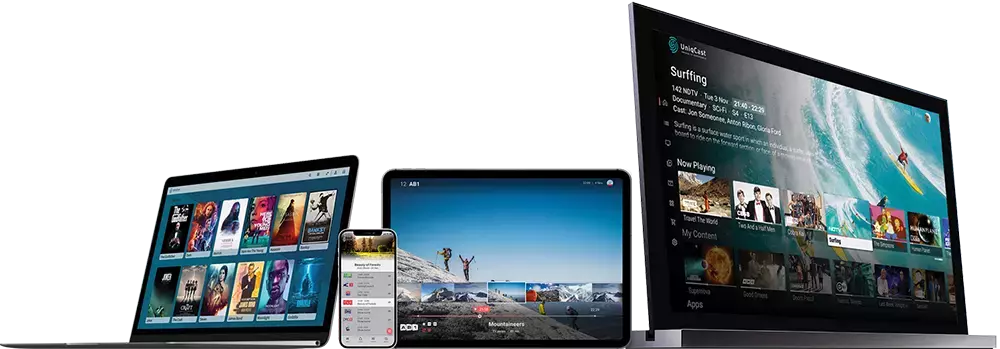
Users want to watch content on any device, anywhere, with a consistent experience and operators need the flexibility to support that without creating a maintenance nightmare.
In 2026, that requirement is still true, but the question “where do we distribute?” has become more strategic because the device layer itself is changing. Smart TV operating systems are becoming stronger aggregators, home screens are turning into premium discovery surfaces, and operators increasingly win by being present at every “start watching” moment, not only inside their own app.
The big screen remains the primary gateway
Even with heavy mobile usage, the living room is still where long-form value is captured (retention, premium viewing hours, and ad value). New research presented by Parks Associates at CES 2026 reports that 61% of U.S. internet households use a smart TV as their primary streaming device, underscoring that the smart TV is the dominant streaming gateway.
Operator implication: treat big-screen UX and distribution as your primary product, not as the “TV version of your mobile app.”
This changes how you should allocate effort:
- CTV (Smart TV) performance and stability (faster start, fewer errors) becomes a top KPI.
- Remote-first interaction design (D-pad, voice, quick actions) is non-negotiable.
- Your service must integrate smoothly with OS-level discovery and search, because many sessions begin before a user opens an individual app.
Smart TV OS ecosystems are becoming the new channel stores
Smart TV platforms in 2026 are actively transforming the home viewing experience. Distribution now goes beyond simply getting the app into an app store, with a focus on aggregation and rapid discovery of content.
For example, Amazon’s Fire TV is rolling out its first major interface refresh in years, explicitly focused on improved navigation and reducing friction in finding content. And broader industry forecasts for 2026 highlight the smart TV home screen itself becoming a premium advertising and discovery surface with native placements and more measurable formats.
Operator implications (practical):
- You need an OS-aware distribution plan:
- participate in universal search and deep linking where available,
- optimize metadata, artwork, and content feeds for platform surfaces,
- and treat home screen presence as part of your acquisition funnel.
- Your competitive set is not only other operators, it’s the OS layer’s aggregated content experience.
Set-top box vs Smart TV app: the 2026 decision framework
Operators still face a classic choice: lead with operator-managed set-top boxes (STBs), lead with smart TV apps, or do both. In 2026, the best strategy is usually hybrid, but with clearer rules about where each approach wins.
When STBs still win (and why they remain relevant)
STBs continue to make sense when you need:
- tighter control of the in-home experience (predictable performance and consistent UI),
- a unified environment for IPTV + OTT + operator features,
- longer lifecycle management and stable device fleets,
- and a “single remote, single experience” proposition for mass-market households.
STBs are also helpful when your business needs strict service guarantees and consistent QoE across a large installed base.
When smart TV apps win
Smart TV app-first strategies tend to win when you prioritize:
- faster time-to-market across multiple markets,
- lower hardware and logistics burden,
- easier bundling/aggregation with third-party OTT apps,
- and consumer preference for built-in TV experiences (which the CES 2026 research supports).
The 2026 best practice: hybrid distribution with consistent identity
Many operators succeed by:
- using smart TV apps for reach and convenience,
- using STBs for premium households, quality-sensitive segments, and advanced operator experiences,
- and ensuring a consistent operator identity (navigation logic, discovery patterns, watchlist/continue watching behavior) across both.
Streaming sticks and boxes
Even as smart TVs dominate, external streaming devices remain important in many homes (and often deliver more consistent performance than older built-in TV interfaces). Consumer tech coverage still highlights that sticks/boxes can be snappier and more consistent than built-in smart TV interfaces that may degrade or stop receiving meaningful updates over time.
Operator move: treat devices like Fire TV, Roku, Google TV, and Apple TV as key distribution targets, especially if your market has long replacement cycles for TVs.
Mobile isn’t only for watching
In 2026, mobile is often where discovery begins, even if viewing ends on the TV.
High-impact mobile patterns for operators:
- browse and search on mobile then handoff to play on TV
- watchlist and notifications as retention levers (new episode, live event starting)
- mobile as a second-screen layer for sports (stats, multi-cam selection, highlights)
Operator move: Treat mobile as a remote, a discovery tool, and a retention channel.
Hardware readiness becomes a product decision
Availability of advanced end-user oriented features often depend on device hardware capabilities, especially on big-tv devices, therefore it is clear that hardware capabilities are no longer a secondary concern. Requirements around memory, security, always-on support, and energy compliance directly determine which UX and AI features are even possible.
In 2026, device strategy becomes a product and business decision: operators must actively decide which segments justify hardware upgrades, and which experiences must gracefully degrade on older devices.
Beyond the home
Vehicle infotainment and other ambient screens are becoming more capable and more relevant to media consumption, especially when parked or charging. While full video in the car remains constrained by safety rules and platform policies, the trend line points toward more screen time opportunities and new UX surfaces over the next cycle.
Operator approach in 2026: plan for car-ready experiences in stages:
- audio-first (news clips, sports talk, highlights as audio),
- short-form video for parked contexts where allowed,
- and account-level continuity so a session can move from car to mobile to TV.
B2B and hospitality form a parallel OTT universe
A notable trend is the separation of hospitality and B2B deployments from retail or operator tier Android TV ecosystems. Licensing, certification, and compliance requirements now define what is technically and commercially possible in these environments.
For a deeper look: Android TV Operator Tier.
For operators and platform providers, this creates a parallel product reality with different UX constraints, monetization models, and lifecycle expectations.
Platform architecture & delivery
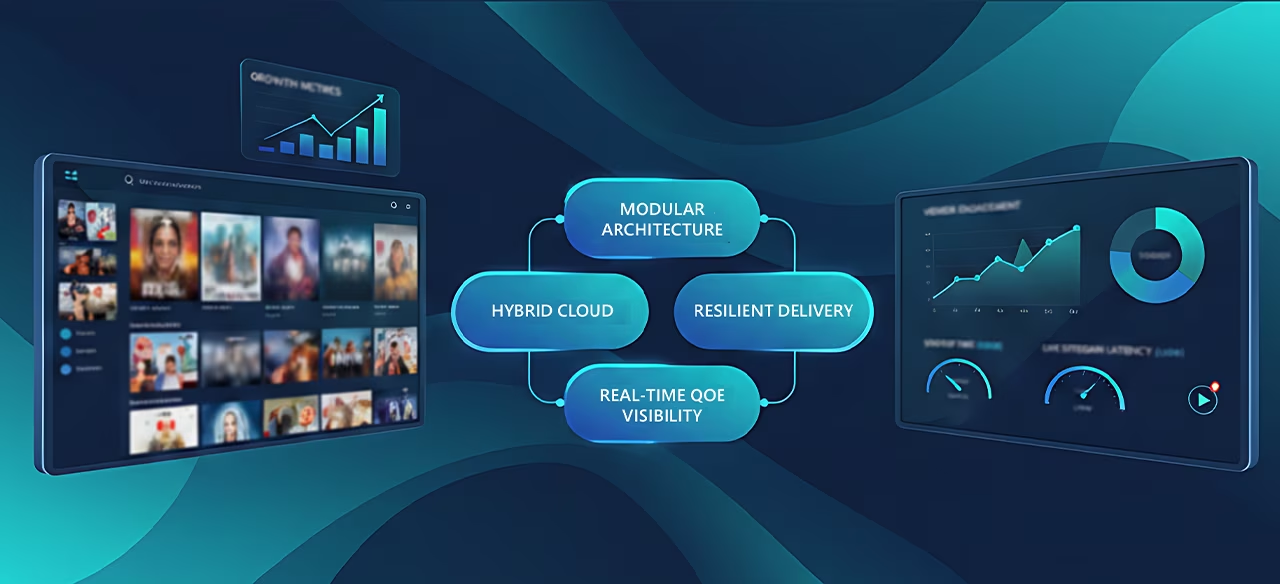
Technical flexibility fuels UI flexibility and business flexibility, and it’s the difference between evolving quickly and becoming a technical hostage of legacy components.
Relevant solution: OTT platform capabilities.
In 2026, that idea becomes even more urgent, because the operating environment is harsher: tighter margins, more device fragmentation, more partnerships/bundles, higher live-event peaks, and rising expectations for reliability and low latency. Industry outlooks describe 2026 as a period of structural change in how streaming stacks are built, favoring modular, interoperable workflows that can adapt quickly.
The 2026 design goal: modular, interoperable, and easy to operate
A modern IPTV/OTT platform is no longer one system. It’s a set of capabilities that must be replaceable without a full platform rebuild:
- Experience layer (apps, UI framework, personalization, search)
- Service layer (user/profile, entitlements, payments, catalogs)
- Playback layer (packaging, DRM, player, analytics)
- Content operations (ingest, metadata, QC, localization)
- Monetization (ad decisioning, SSAI/CSAI, measurement)
- Observability (QoE, QoS, business KPIs, alerting)
In 2026 predictions, a recurring theme is moving toward modular, interoperable workflows as the industry optimizes for profitable growth and faster adaptation.
Operator takeaway: don’t optimize for the most complete platform. Optimize for the platform that can change the fastest with the lowest operational pain.
Cloud-native vs hybrid vs selective repatriation
The conversation has matured beyond tendencies to move everything to cloud. 2026 industry predictions increasingly describe hybrid optimization: splitting workloads across public cloud, private infrastructure, edge, and on-prem to balance cost, performance, compliance, and scale.
At the same time, some forecasts point to a new phase of cloud repatriation as a reaction to complexity, cost unpredictability, and the operational realities of always-on video services (especially as AI enters more workflows).
A practical 2026 placement rule (what runs where)
- Public cloud (elastic workloads): bursty processing, event peaks, experimentation, data/AI workloads that benefit from rapid scaling.
- Private/on-prem (steady, predictable workloads): core services where unit economics and consistent performance matter and where you control costs tightly.
- Edge (latency + scale): low-latency live, regionalized delivery, peak offload, closer-to-user caching, and experience consistency during mass events.
Operator takeaway: choose architecture based on workload shape and business constraints.
Multi-CDN, edge strategy, and delivery resilience
In 2026, uptime and consistency are commercial goals: outages and playback instability translate directly into churn and lower ad value.
A 2026-ready delivery strategy typically includes:
- multi-CDN (policy-based routing and failover)
- regional edge caching where it makes sense
- playback resilience patterns (fallback manifests, graceful degradation, device-specific bitrate ladders)
- peak-event readiness drills (sports finals, national events, popular premieres)
This aligns with broader 2026 media delivery commentary emphasizing security, resilience, and operational change.
QoE observability: measure what viewers feel, then close the loop
Operators need observability, t.i. the ability to detect issues, attribute root causes, and act before social media and call centers tell you something is broken.
What to measure (minimum viable QoE stack)
- Startup time
- Rebuffer ratio / rebuffer events
- Playback failure rate (by device model, OS version, ISP, region)
- Average bitrate / quality switches
- Live latency (for live tiers)
- Ad experience QoE (ad errors, ad load time, mid-roll failure)
Then connect QoE to business outcomes:
- QoE → session length
- QoE → churn probability
- QoE → ad completion and revenue
Operator takeaway: if you can’t see QoE in near real time, you can’t manage it and your “premium UX” is at risk.
Low-latency streaming in 2026: pick the right tool by experience goal
Sub-3-second latency is shifting from a niche, high-end feature, often limited to sports broadcasting, to a broad consumer expectation. This transition is particularly evident in experiences that depend on precise timing, such as interactivity, second-screen synchronization, and multi-view streaming. In 2026, industry forecasts anticipate that low latency will be widely integrated into sports and interactive streaming models.
The practical protocol reality
- LL-HLS / Low-latency CMAF workflows are widely used approaches when you want lower latency and broad device reach (especially Apple ecosystems), but they add complexity and require careful tuning.
- WebRTC remains the go-to for ultra-low latency (sub-second class), but tradeoffs include scale/cost/complexity depending on use case and audience size.
Operator decision rule (simple)
- If your goal is mass-market live with broad compatibility: low-latency HLS/DASH with CMAF-style packaging and disciplined tuning.
- If your goal is interactive real-time experiences (true sync, instant reactions, certain betting contexts where allowed): WebRTC-style ultra-low-latency paths.
Scaling live efficiently: Multicast ABR and hybrid delivery
As more premium viewing shifts to IP delivery, operators face a classic problem: peak traffic during big live events. Multicast ABR (mABR) is increasingly positioned as a practical scalability layer to reduce backbone load while maintaining QoE during mass live peaks.
At the same time, industry discussion around converged broadcast/streaming delivery continues (including alignment with mobile distribution via 5G Broadcast and DVB’s hybrid delivery vision).
Operator takeaway: if live sports and national events are central to your strategy, build a peak-delivery plan that considers:
- mABR for scalable in-network delivery where feasible,
- smart CDN strategy for everything else,
- and product-tier decisions (which events need lower latency and which don’t).
Flexibility as an operator checklist
The 2025 guide advises operators to prioritize flexibility and transparency in technical partnerships to avoid becoming technical hostages. For 2026, this translates directly into the following explicit architectural requirements:
- Replaceable components (players, DRM, ad stack, recommendation/search, analytics)
- Open APIs and clean data models (so partners and bundles don’t become custom one-offs)
- Automated CI/CD and testing (so releases don’t become quarterly big bangs)
- Operational automation (especially as agentic AI reduces repetitive workloads and shifts teams toward higher-value work)
- Clear cost observability (unit economics per hour streamed, per device class, per event peak)
Operator takeaway: flexibility shows up as faster launches, fewer outages, easier partnerships, lower operating cost, and the ability to adopt new monetization and UX models without rebuilding the whole stack.
2026 trend watchlist: what to build for next
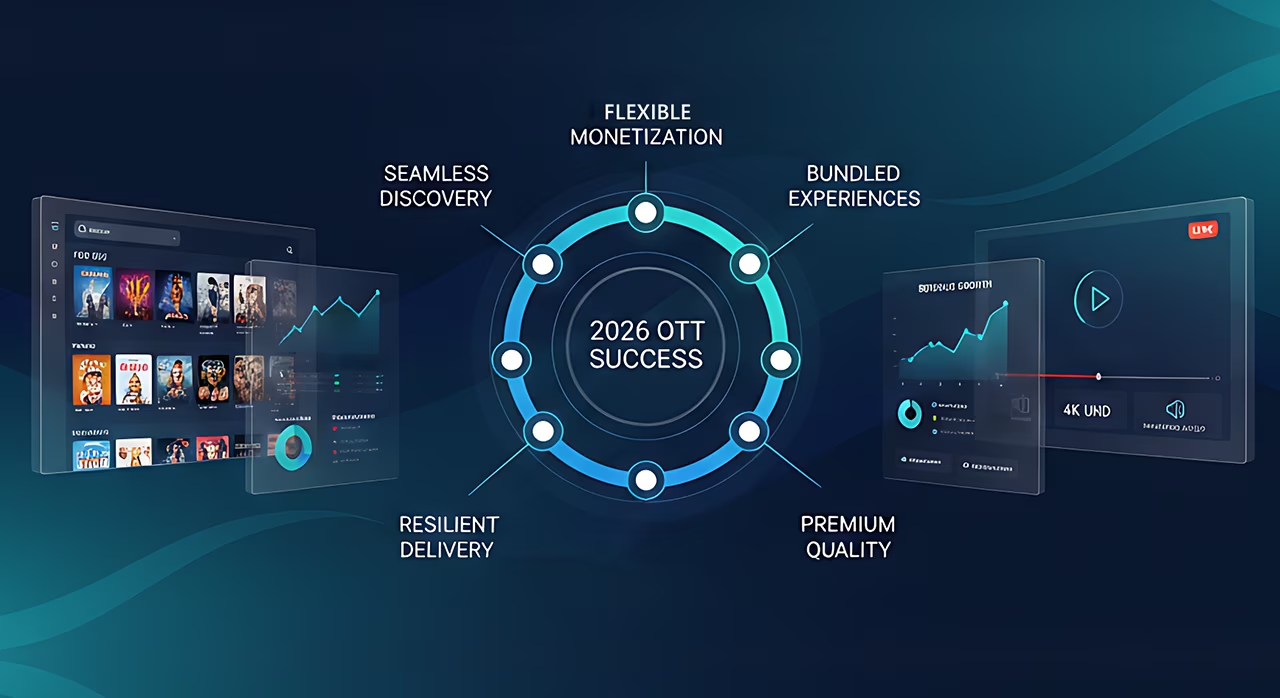
This refreshed trend watchlist is organized into four operator-focused sections: Experience & discovery, Monetization & ads, Content & partnerships, and Delivery & operations. The goal is to highlight what’s emerging in 2026 that creates real product and revenue opportunities for IPTV/OTT operators.
Experience & discovery trends
Trend 1: Frictionless streaming becomes the brand (simplicity wins)
Industry 2026 outlooks repeatedly point to simplification and frictionless access as a defining theme, because consumers are tired of juggling apps, logins, and subscriptions.
Operator opportunity: win the household with effortless TV
- Unified search and discovery across catalogs and partner apps
- Consistent watchlist/continue-watching across devices
- Fewer steps from home screen to playback
Practical move in 2026: build a measurable time-to-content program and track it weekly.
Trend 2: AI shifts from recommendations to intent-based discovery
The center of gravity is moving from rows of recommendations to intent-based experiences (semantic search, conversational discovery, ask for what you want). This shows up strongly in TV industry trend forecasts for 2026, especially around AI-driven personalization and UX evolution.
Operator opportunity: reduce browsing fatigue and raise content-to-play conversion.
- Semantic search (meaning > keywords)
- Intent-based collections (20-minute comedy, family night, new releases in my language)
- Explainable recommendations to build trust
Practical move in 2026: start with search quality, because it’s the highest-intent surface.
Trend 3: Sports UX becomes a product category (multi-view + personalization)
Sports is not only content, it’s a product experience. Multiple 2026 outlooks position sports as both the growth driver and the stress test for streaming platforms.
Operator opportunity: differentiate without overpaying on rights by delivering the best sports experience.
- Multi-view packages
- Team/league hubs and “what matters now”
- Personalized audio options and alternate feeds (where available)
Signal to watch: streaming services are pushing premium AV improvements and personalization in live sports broadcasts, including next-gen Dolby formats for picture and audio.
Trend 4: Short-form surfaces
Short-form and micro-episode formats keep rising as a parallel premium entertainment lane. Streaming Media’s 2026 prediction roundup explicitly calls out “micro-episode” and vertical premium storytelling formats.
Operator opportunity: use short-form as a funnel to long-form and live.
- Highlights, recaps, best moments, quick previews
- Mobile discovery into TV playback handoff
- Daily opens and habit formation (without copying social media UX)
Practical move in 2026: treat short-form as a discovery tool with clear next actions (play full, add to watchlist, watch live).
Monetization & advertising trends
Trend 5: Hybrid monetization is the default operating model
2026 forecasts emphasize market maturity and the need for flexible portfolios (tiers, bundles, ad-supported layers) rather than single-model offers.
Operator opportunity: design a monetization ladder:
- FAST / free tiers for reach and sampling
- AVOD for value-conscious households
- SVOD for premium + sports + features (UHD, multi-view, multi-room)
Trend 6: Standardized CTV ad formats accelerate
IAB Tech Lab’s CTV Ad Portfolio and Guidance (and related announcements) signal a strong push toward standardizing core CTV ad formats and how they trade programmatically.
Operator opportunity: monetize more efficiently with less bespoke integration work.
- Prioritize standards-aligned formats (pause/menu/screensaver/overlays where they fit your UX)
- Reduce creative incompatibility and QA chaos
- Improve buyer confidence through consistency
Practical move in 2026: adopt standards-first ad product planning (formats + measurement + reporting aligned to recognized guidance).
Trend 7: Outcomes-based CTV pressure increases
Ad market trend forecasts for 2026 highlight outcomes-based measurement, better frequency control, and AI-driven optimization as key priorities.
Operator opportunity: compete for budgets by proving results.
- Frequency management (reduce repetition, improve viewer experience)
- Strong measurement hygiene (events, errors, completion)
- Better transparency and verification
Signal to watch: more emphasis on verification/brand safety and clean inventory in CTV, including partnerships focused on fraud prevention and traffic verification.
Trend 8: FAST becomes more premium and strategically integrated
Executive/industry outlooks for 2026 increasingly describe FAST evolving from “free channels” into a more premium, strategically planned model that drives acquisition and monetization.
Operator opportunity: build FAST with identity and conversion paths.
- Themed channels with consistent editorial taste
- Local and regional positioning
- Clear upsell hooks into SVOD or event passes
Content & partnership trends
Trend 9: Bundling and aggregation become growth engines
Predictions focused on 2026 streaming point to bundling, rotating access, and simplified subscription packaging as key ways to combat subscription fatigue and reduce churn directly aligned to operator strengths (billing, customer care, distribution).
Operator opportunity: become the household’s streaming home base.
- Bundle partner OTT services into monthly plans
- Create flexible add-ons and rotating access offers
- Use unified discovery to reduce app hopping
Practical move in 2026: treat bundling + aggregation as a product feature.
Trend 10: Experiences rise: live moments, community, and authenticity
2026 media outlooks highlight the rise of experiences: live events, creator ecosystems, authenticity, and engagement models that go beyond passive playback.
Operator opportunity: build event mechanics that improve retention.
- Live hubs and what’s on now
- Watch-together, reactions, lightweight community rails
- Local events + local sports as differentiators
Delivery & operations trends
Trend 11: Delivery stress is constant for sports
Sports Business Journal frames 2026 as an era where live sports surges become frequent, meaning delivery chains must handle sustained peak pressure, not occasional spikes.
Operator opportunity: make resilience a commercial capability.
- Peak readiness drills
- Multi-CDN and failover policies
- QoE observability tied to churn and ad yield
Trend 12: Low latency expands beyond niche
Live streaming trend commentary for 2026 stresses low latency as a requirement for sports, interactivity, and overlays, yet it increases complexity and cost.
Operator opportunity: tier latency by experience value.
- Premium low-latency for top sports/events
- Standard latency for general live channels
- Use low latency to enable second-screen sync and interactive moments
Trend 13: Premium AV upgrades become differentiators again
Streaming platforms are shipping next-gen HDR and audio improvements that raise the baseline expectation for premium streaming, especially for live sports.
Operator opportunity: turn quality into an upsell and retention tool.
- UHD/HDR tiers where market-ready
- Better audio options (dialogue enhancement, immersive audio where supported)
- Device strategy that avoids premium features that only work on 5% of the base
The 2026 blueprint for IPTV/OTT operators

In 2026, streaming is no longer defined by novelty. It’s defined by maturity. Differentiation comes from how well operators execute across discovery, monetization, and delivery and not from how many features they can list.
Operator advantage is making streaming easier
The biggest opportunity for IPTV/OTT operators in 2026 is to win the household by doing what operators are uniquely positioned to do:
- simplify access across services and content sources,
- make discovery feel effortless,
- and package offers in ways that reduce churn and increase perceived value of the content.
The winners will combine four strengths
By the end of 2026, the strongest services will be those that combine:
- Discovery excellence
Intent-based search, clean metadata operations, and Discover & Watch journeys that reduce browsing fatigue and increase content-to-play conversion. - Hybrid monetization maturity
Portfolios that blend SVOD, AVOD, FAST, and bundles, supported by CTV ad capabilities that are standards-aware, measurable, and operationally efficient. - Distribution where sessions begin
CTV (smart TV) ecosystem readiness, and consistent identity across STB, smart TV apps, and mobile, so the operator stays present at every start of the watching session. - Flexible delivery that pays off
Modular architecture, pragmatic infrastructure choices, strong QoE observability, and event-ready delivery strategies, so reliability becomes a commercial advantage.
The practical takeaway
If there is one unifying lesson for 2026, it’s this:
Operators don’t need to outspend the market. They need to out-execute it.
That means choosing technologies and trends only when they increase measurable outcomes:
- faster time-to-content,
- higher engagement and retention,
- better ARPU yield,
- lower unit cost to deliver,
- and more resilience during peak demand.
A final perspective for 2026

The real temptation in 2026 is not missing the next trend, but chasing too many of them at once. AI here, low latency there, new ad formats everywhere.
What looks like momentum often turns into fragmentation.
The better approach is to build a coherent system:
- start with the fundamentals (UX, metadata, reliability),
- add differentiated experiences where your market rewards them (sports, bundles, short-form funnels),
- and keep your platform modular so you can adopt what’s next without rebuilding what you already have.
If there is one thing that defines streaming in 2026, it is not solely innovation speed. It is decision maturity.
The operators that win are not the ones chasing every new feature, but the ones making clearer decisions, faster trade-offs and fewer compromises in execution.
Across discovery, monetization, and delivery, the real advantage increasingly comes from disciplines like:
- saying no to features that add complexity without improving outcomes,
- investing in quality before platforms enforce it for you,
- and designing experiences that feel obvious to users, even when they are hard to build behind the scenes.
In many cases, success in 2026 will not come from what you add next, but from what you simplify, remove or stop maintaining.
Operators don’t win by spending more. They win by executing better: consistently, quietly and at scale.