

How Telco TV Operators Reduce Churn, Differentiate Brands, and Compete with OTT (Part 2)
Quick Summary
The business case for telco-operated IPTV and OTT has changed a lot since the early days of multicast TV. Back then, the logic was relatively straightforward: launch TV to defend broadband, bundle it into a triple-play offer, and keep customers from leaving. Today, the reality is far more dynamic. Even with fierce competition from global streaming giants and major shifts in how people watch video, TV remains a strategically valuable part of the telco portfolio.
What has really shifted is the role TV plays. It is no longer only about delivering channels. A modern telco TV proposition is increasingly a unified entertainment ecosystem, designed to strengthen broadband, reduce churn, and create new monetization paths that go beyond the classic linear subscription model.
This post is Part 2 of a three-part series based on a complete, more detailed whitepaper, The Telco TV Playbook.
In this second part, we will break down the IPTV and OTT business model for telcos in a practical way, covering:
- Why TV still matters commercially, starting with its impact on churn and loyalty
- Where revenue comes from today, from subscriptions to premium upsells, advertising models, partnerships, and wholesale opportunities
- What it costs to run telco TV, including content, platform, delivery, devices, and operations
- The biggest challenges operators face, from OTT competition and rights complexity to device fragmentation, legacy stacks, and support load
- The strengths telcos can build on, such as network control, billing relationships, local market advantages, and bundling power
The Modern Telco TV Business Case: Driving Churn Reduction
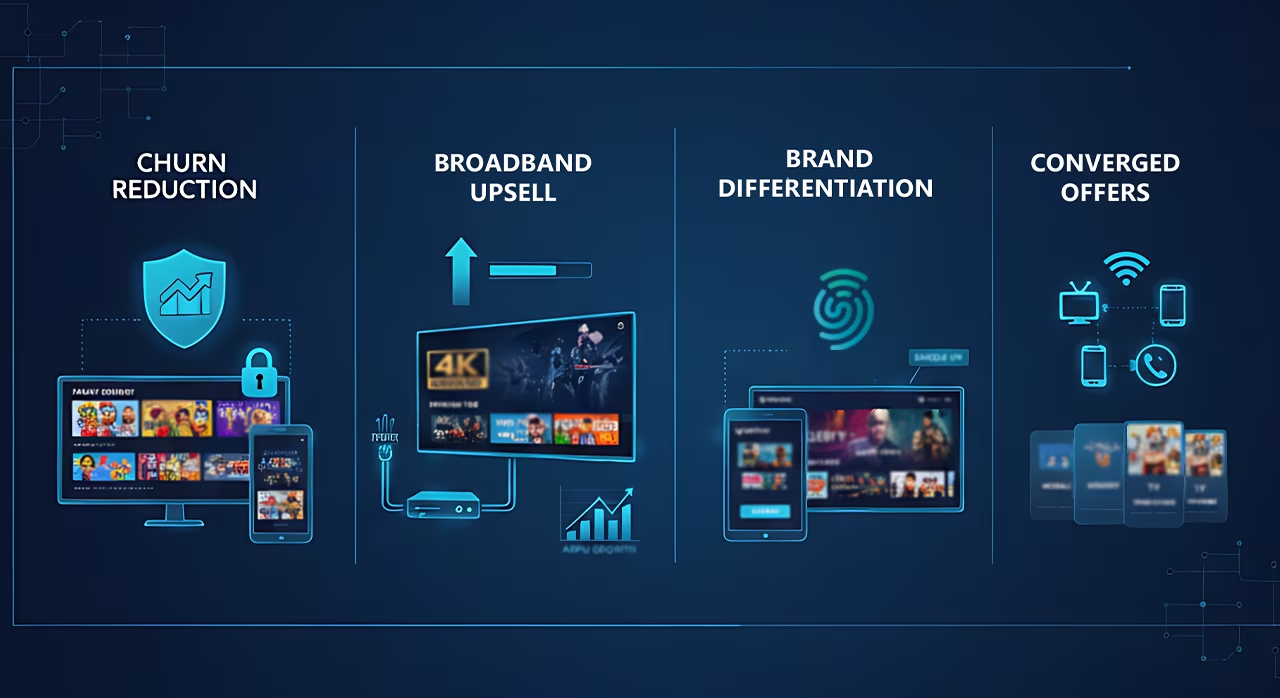
TV Drives Churn Reduction and Customer Retention
If there is one business outcome that keeps telcos investing in IPTV and OTT, it is churn reduction. Customers who bundle TV with broadband typically stay longer and switch providers less often than broadband-only households. TV adds daily habits, family usage, and content familiarity that create real stickiness and make switching feel like a hassle.
For a deeper look: OTT subscriber retention strategies.
This retention effect tends to be even stronger in markets where:
- broadband speeds look similar across providers
- aggressive discounting encourages customers to hop between operators
- customers expect a full-service bundle, not just internet
In other words, when connectivity is easy to compare and easy to replace, TV becomes one of the most reliable ways to keep the relationship stable.
TV Supports Broadband Upgrades
TV also helps telcos sell faster broadband. High-quality video experiences, especially HD and 4K, plus features like cloud DVR and multiscreen viewing, naturally push households toward premium broadband tiers. That has a direct impact on ARPU and helps operators justify network investments, especially as fiber rollout expands.
This is one of the underappreciated roles of telco TV: it does not just generate revenue, it helps broadband monetize better.
TV Enhances Brand Differentiation
When most providers are selling broadly similar connectivity, TV becomes a frontline differentiator. A compelling TV proposition gives operators more ways to stand out through a mix of content, pricing, and user experience.
With the right TV offer, operators can:
- stand out against ISP competitors by pairing attractive content with a strong UX and a configurable interface, supported by a solid price-performance balance
- compete more effectively with cable operators
- promote bundles under a unified brand experience, instead of feeling like a collection of disconnected services
Put simply, TV helps the operator feel like a complete entertainment provider, not just a connection provider.
TV Strengthens Converged Offers (Triple-Play and Quad-Play)
For telcos that also sell mobile services, TV can be a multiplier. Bundling TV with broadband and mobile reduces churn across the entire portfolio, because customers become more invested in the overall package.
In many households, TV is also the most emotional part of the bundle. People may complain about internet speeds, but they bond with the shows, sports, and family routines that happen around the TV experience. That is why a strong TV product often becomes the anchor of convergence strategy, helping triple-play and quad-play offers feel more valuable and harder to replace.
Core Revenue Streams in Telco IPTV and OTT
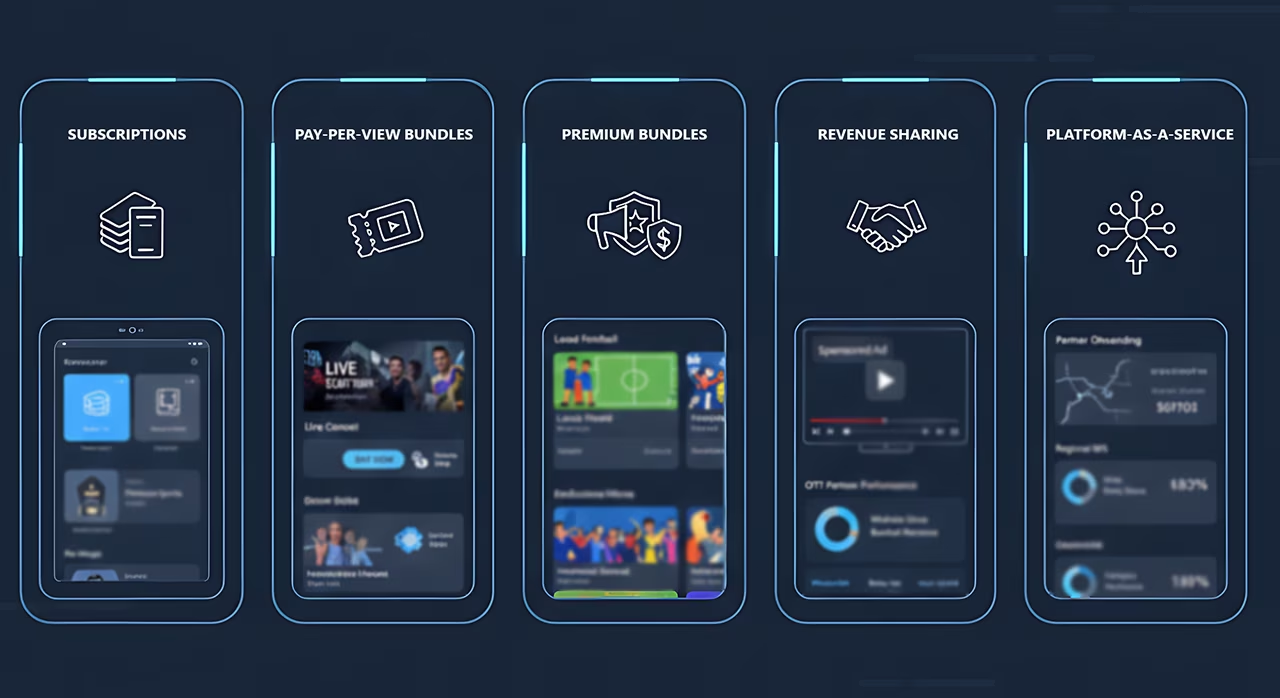
The original IPTV model leaned heavily on linear TV subscription fees. Today, that mix is far more diverse. Most operators still rely on subscriptions as the foundation, but the strongest propositions add multiple layers of monetization on top, from event-driven upsells to advertising and B2B platform revenue.
Telco TV Subscription Revenues
Subscriptions remain the backbone of most telco TV businesses because they stabilize ARPU and provide predictable cash flow. They typically include:
- Basic TV packages
- Premium packages, often built around sports, movies, kids, or lifestyle content
- Multi-room or multi-screen add-ons
- Network PVR services and content storage options
The key shift is that subscription packaging is now designed to be modular, so operators can upsell households as their needs grow, instead of relying only on a single, one-size-fits-all tier.
Pay-Per-View and Transactional VoD
Pay-per-view remains a strong upsell lever, especially for high-intensity events that customers are willing to pay extra for, such as major sports, concerts, and special broadcasts. Transactional VoD adds incremental revenue through movie rentals and premium series purchases, often driven by new releases or exclusive windows.
This stream tends to perform best when the purchase flow is frictionless, with billing integrated into the telco account and the offer surfaced at the right moment in the UI.
Premium Content Bundles
Premium bundles are a classic pay-TV monetization engine, and they still matter. Typical examples include premium movie packages, local sports leagues and premium sports channels, and international or niche channel packs.
Exclusivity is the real accelerant here. When a telco can secure unique or locally essential content, it becomes a reason to upgrade and a reason to stay.
Advertising and FAST Channels
Advertising has become increasingly relevant as AVOD and FAST models grow. Depending on the market and what regulations allow, monetization can include:
- Ad-supported linear channels
- Targeted advertising
- Pre-roll and mid-roll ads in VoD
- Sponsorships and branded content
For operators, this opens a path to serve customers who are price-sensitive, while still generating revenue even if they are less willing to commit to large subscription bundles.
Revenue Sharing with OTT Partners
As more telcos move into super-aggregation, global OTT services shift from pure competition to potential partners. Many operators negotiate commercial agreements that can include:
- Wholesale pricing
- Distribution fees
- Integrated billing revenues
- Revenue share for bundled offers
The business benefit is straightforward: the telco keeps a strong role in discovery and billing, while customers get a simpler experience that reduces subscription fatigue.
Wholesale and platform-as-a-service
For larger operators, OTT can become a platform business. Some telcos extend their TV platform to partners such as regional ISPs and smaller operators.
This creates a B2B revenue line that can be high-margin, because the core platform is already built and the incremental cost of onboarding additional partners is often lower than the cost of winning new retail households one by one.
The Cost Structure Behind Telco TV Services
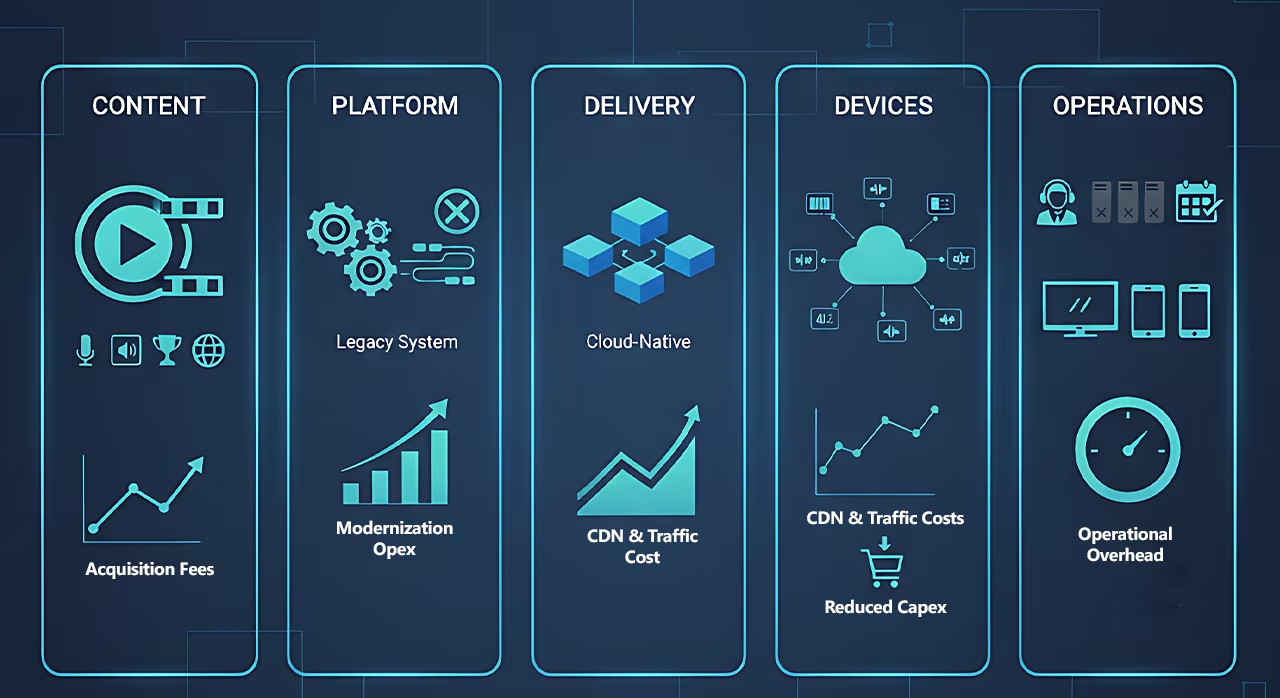
Running an IPTV and OTT service is a full-stack operation with major cost centers that sit across content, technology, delivery, devices, and day-to-day operations. Understanding these costs helps explain why so many telcos are modernizing and why cloud-ready, modular platforms are becoming the default direction.
Content Acquisition Costs
For most operators, content is the biggest line item. It typically includes:
- linear channels and retransmission rights
- VoD and studio licensing fees
- sports rights, often disproportionately expensive
- local content obligations or production quotas in regulated markets
Sports is the cost category that can swing the whole business. The wrong deal can destroy margins, while the right sports package can drive upgrades and retention. That is why many operators treat sports rights decisions as board-level strategy.
Telco TV Platform and Middleware Costs
The platform is the engine behind the service, and its cost profile depends heavily on whether the operator is running a legacy IPTV stack or a modern cloud-ready architecture.
Legacy middleware often comes with:
- high licensing fees
- limited flexibility for updates
- expensive custom integrations
- costly support and long change cycles
Modern platforms tend to shift the economics over time. They are built to evolve faster and integrate third-party services more easily. The payoff is constant efficiency improvements as the service scales and regularly updates that do not turn into major projects.
CDN, Streaming, and Network Costs
As soon as you lean into OTT delivery, new cost dimensions appear. Operators must plan for:
- CDN capacity and peering
- storage for cloud DVR and catch-up TV
- transcoding and packaging
- increased broadband traffic that impacts network planning
This cost area is one reason why efficiency matters so much in modern video delivery. Optimizing traffic and adopting modern codecs can help manage ongoing operating costs, especially when usage spikes during major live events.
Device Costs
Devices are a classic telco TV cost center, especially when a service depends heavily on operator-issued set-top boxes. Set-top boxes create significant capital expense, including:
- procurement
- logistics and installation
- replacement and maintenance
This is where app-based strategies can change the math. When more viewing moves to smart TVs and streaming devices, operators can reduce dependence on set-top boxes, which often lowers both CapEx and support load over time.
Operational Costs
Even with the best platform, telco TV remains operationally intensive. Typical ongoing costs include:
- customer support and call centers
- network operations and monitoring
- field technicians
- content operations teams
- marketing and subscriber management
OTT can simplify some parts of operations by reducing hardware-related issues, but it can also introduce new operational burdens, especially as device diversity grows. Supporting many platforms requires development, certification, maintenance, and testing, and it raises the bar for quality across every screen.
Key Challenges Telco TV Providers Face in IPTV and OTT
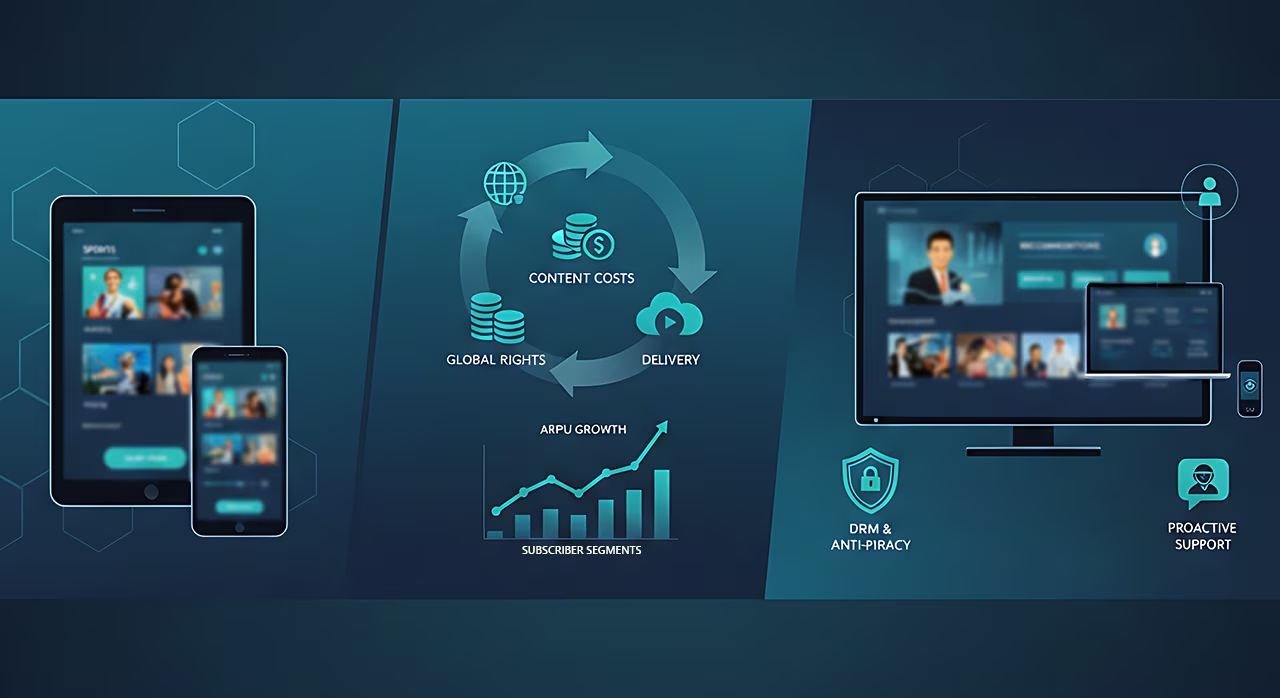
Even when the business case is strong, delivering telco TV at the level customers expect is not easy. Operators compete with global platforms that set the experience benchmark, while also managing complex rights, end-to-end delivery responsibility, and the realities of legacy technology. The challenges below are the ones that repeatedly shape outcomes in real deployments.
Telco TV Provider Competition from Global OTT Platforms
Global streaming services have trained customers to expect instant access, polished interfaces, and seamless experiences across devices. That changes the baseline for telco TV, because subscribers do not compare the operator only with local competitors, they compare it with the best consumer streaming apps they use every day.
The strategic risk is clear: if the telco TV experience feels outdated or fragmented, broadband begins to look like a pure utility and the operator loses relevance in the home entertainment journey.
Rising Content Costs and Rights Complexity
Content is expensive, and it is also complicated. Rights are fragmented by territory, device type, and distribution model. Sports inflation is a constant pressure point, and exclusivity is hard to secure. In many markets, regulations add additional obligations around local content.
This creates a difficult balancing act: operators must offer enough content to be competitive, but cannot let rights costs undermine profitability.
User Experience and Device Fragmentation
Customers now expect the same core experience on every screen. That includes features like profiles, watchlists, recommendations, start-over, catch-up, and nPVR. Delivering that consistently is challenging because the device universe is huge: multiple smart TV ecosystems, streaming sticks, mobile platforms, web, and sometimes gaming consoles.
Every additional device category adds testing, certification, maintenance, and support complexity. When the experience is inconsistent across devices, customers notice immediately.
Legacy Platforms and Slow Time-to-Market
Many telcos still operate on platform stacks built for Wave 1 or Wave 2 IPTV models (check Part 1 of this blog series). These systems are often monolithic, heavily customized, and expensive to change. That slows feature rollouts, makes integrations harder, and can lock operators into vendor roadmaps that do not match the pace of the market.
The problem becomes especially visible during high-demand moments such as major sports events. Legacy platforms may struggle with scalability, peak concurrency, or the rapid feature iterations customers now expect.
Operational Complexity End-to-End
Unlike pure OTT providers, telcos often own almost every part of the chain: the network, home Wi-Fi, the TV platform, CDN relationships, apps, devices, and customer support. That gives telcos unique power, but it also means they carry responsibility for the whole service experience.
Even when an issue is caused by a third-party component, customers typically blame the operator, because the operator is the face of the service and the bill payer relationship.
Customer Support Burden
TV support is rarely simple. It can involve Wi-Fi issues, device compatibility problems, set-top box failures, app crashes, login friction, or streaming quality complaints. The more devices and delivery methods an operator supports, the bigger the support load becomes.
This is why proactive diagnostics and a simpler device strategy often have direct financial impact.
Market Saturation and ARPU Pressure
In many mature markets, pay-TV growth has plateaued, and younger audiences increasingly rely on streaming-only habits. At the same time, customers are price-sensitive and often reluctant to pay for large bundles, even if they still value live channels like sports and news.
Operators must serve two audiences at once: linear-first households that want familiarity and reliability, and streaming-native audiences that want flexibility, personalization, and app-style UX. Balancing both without bloating costs is difficult.
Security, Piracy, and DRM
Piracy remains a real threat, especially for premium sports and live channels. Credential sharing, restreaming, and illicit IPTV services can diminish revenue and weaken content partner trust.
That makes DRM, watermarking, and anti-piracy capabilities a continuing requirement, with both cost and operational implications.
Internal Organizational Challenges
Finally, a lot of telco TV challenges are internal. Modern OTT requires product and engineering skills that are not always native to traditional telecom organizations. Operators need strong UX and product design, streaming engineering, app development, data and analytics, and content partnerships, all working together.
Siloed teams and slow decision cycles can hold back execution even when the strategy is right. That is why organizational alignment often matters as much as platform selection.
Telco Strengths in IPTV and OTT Field
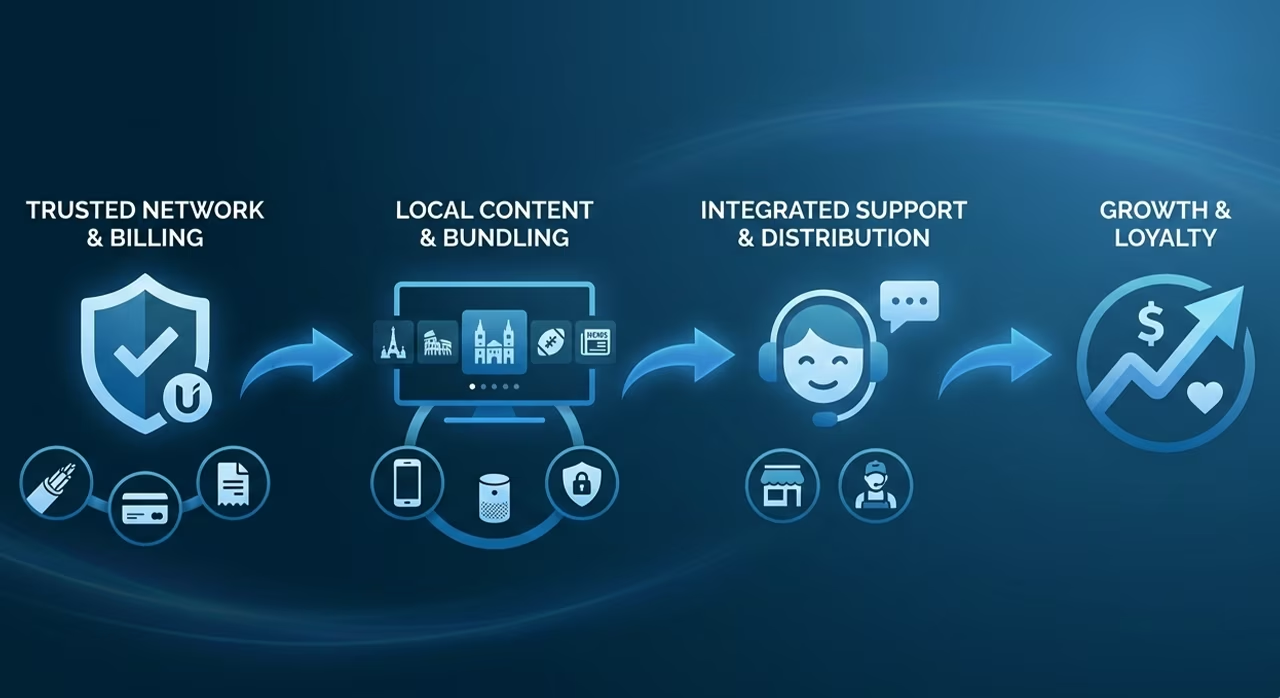
Despite the intensity of competition and the complexity of running TV end to end, telcos still have advantages that many streaming-first players cannot easily replicate. The operators who win are usually the ones who lean into these strengths while modernizing the weak spots, especially the user experience, integration flexibility, and speed of delivery.
Network Control and Quality of Service
Telcos own the access network, and that matters. It gives operators more influence over reliability, latency, and overall service stability than pure OTT providers typically have.
It also enables optimization strategies that can be commercially important, especially for live TV and major peak events. In some cases, multicast remains a unique efficiency advantage for delivering popular live channels without exploding network costs.
Trusted Billing and Customer Base
Telcos already have a direct relationship with customers, typically with long-standing trust around billing and service delivery. This becomes even more valuable as subscription fatigue grows, because many customers prefer the simplicity of one integrated bill rather than managing multiple individual subscriptions and payment flows.
For IPTV and OTT, this also reduces friction. When TV activation, upgrades, and add-ons are tied into the existing telco account, the commercial funnel becomes smoother and conversion tends to improve.
Local Market Knowledge and Content Relationships
Global streamers have scale, but telcos have local relevance. Operators often have stronger ties to national broadcasters, regional channels, and local sports ecosystems. They also understand language, cultural habits, and viewing preferences market by market.
This local advantage can be a major differentiator, especially in markets where national content and sports define customer loyalty more than global catalog size.
Distribution and Support Capabilities
Telcos can still win on delivery and support. Many operators have retail footprints, installation options, service centers, and customer care teams that can onboard households quickly and resolve issues across both connectivity and TV.
This is particularly valuable for customers who want a turnkey service, and for segments like hospitality and enterprise where installation and ongoing support are part of the buying decision.
Brand Recognition and Marketing Leverage
Operators often have strong national brands and large customer bases, which can be used to promote new TV propositions more efficiently than smaller OTT operators.
Scale can also improve negotiating leverage with content partners and OTT services, especially when the operator can offer distribution reach and integrated billing as part of the deal.
Bundling and Convergence Advantage
Perhaps the biggest telco strength is bundling power. TV is a sticky layer that can be tied to fiber upgrades, mobile plans, premium Wi-Fi, smart home products, security, and other digital services.
When done well, convergence makes a churn reduction compound. The more services a household relies on through one operator, the less likely it is to leave.
Wrap-up and Bridge to Part 3
The telco TV business model has evolved from a simple add-on to a multi-layer ecosystem strategy. Subscriptions still matter, but the strongest IPTV and OTT propositions now combine churn reduction, broadband uplift, and multiple monetization streams, including premium upsells, event-based purchases, advertising models, OTT partnerships, and even wholesale platform revenue.
At the same time, content costs keep rising, device ecosystems keep expanding, customer expectations keep climbing, and legacy stacks still slow many operators down. That is why telco strengths matter more than ever: network control, trusted billing, local relevance, distribution reach, and the ability to bundle services into one household relationship.
In Part 3 of the Telco TV Playbook blog series, we will move from the business model to execution. We will look at what it takes to modernize successfully, including platform and architecture choices, delivery and device strategy, aggregation and discovery, and how to migrate without disrupting customers or slowing the business.