
The World Is About to Watch TV Together. The Real Question Is: Will Your Platform Be Ready?
Quick Summary
Every few years, something unusual happens.
People who normally never watch sports suddenly care.
Families rearrange schedules.
Bars fill up.
Entire countries pause.
And for a few weeks, television becomes a shared global experience again. Very few events still have the power to unite audiences across time zones and continents in real time. The FIFA World Cup remains one of them.
The last tournament engaged around 5 billion people across television, streaming, social media, and digital platforms worldwide. The final alone reached close to 1.5 billion viewers globally. FIFA now expects the 2026 tournament to become the largest World Cup in history, with expanded participation, more matches, and potentially even larger global engagement.
For operators and broadcasters, that scale creates an opportunity.
But it also creates pressure.
Because when millions of subscribers sit down to watch the same match at exactly the same time, nobody remembers who scored the opening goal if the stream buffers.
Sports Viewers Have Changed
The way audiences consume major sporting events today looks very different from even a few years ago.
For a deeper look: live sports OTT streaming.
The television screen is still at the center of the experience, but it is no longer the only screen.
Fans jump between live matches, statistics, social media, highlights, short-form clips, messaging apps, and second-screen experiences.
Some viewers watch every minute.
Others only want key moments.
Some are watching from home.
Others are watching while commuting, traveling, or moving between devices throughout the day.
The expectation is no longer simply access to content.
The expectation is flexibility.
And that changes what operators need from their video platform.
The Match Starts Before Kickoff
For many viewers, the World Cup experience starts long before the referee blows the whistle.
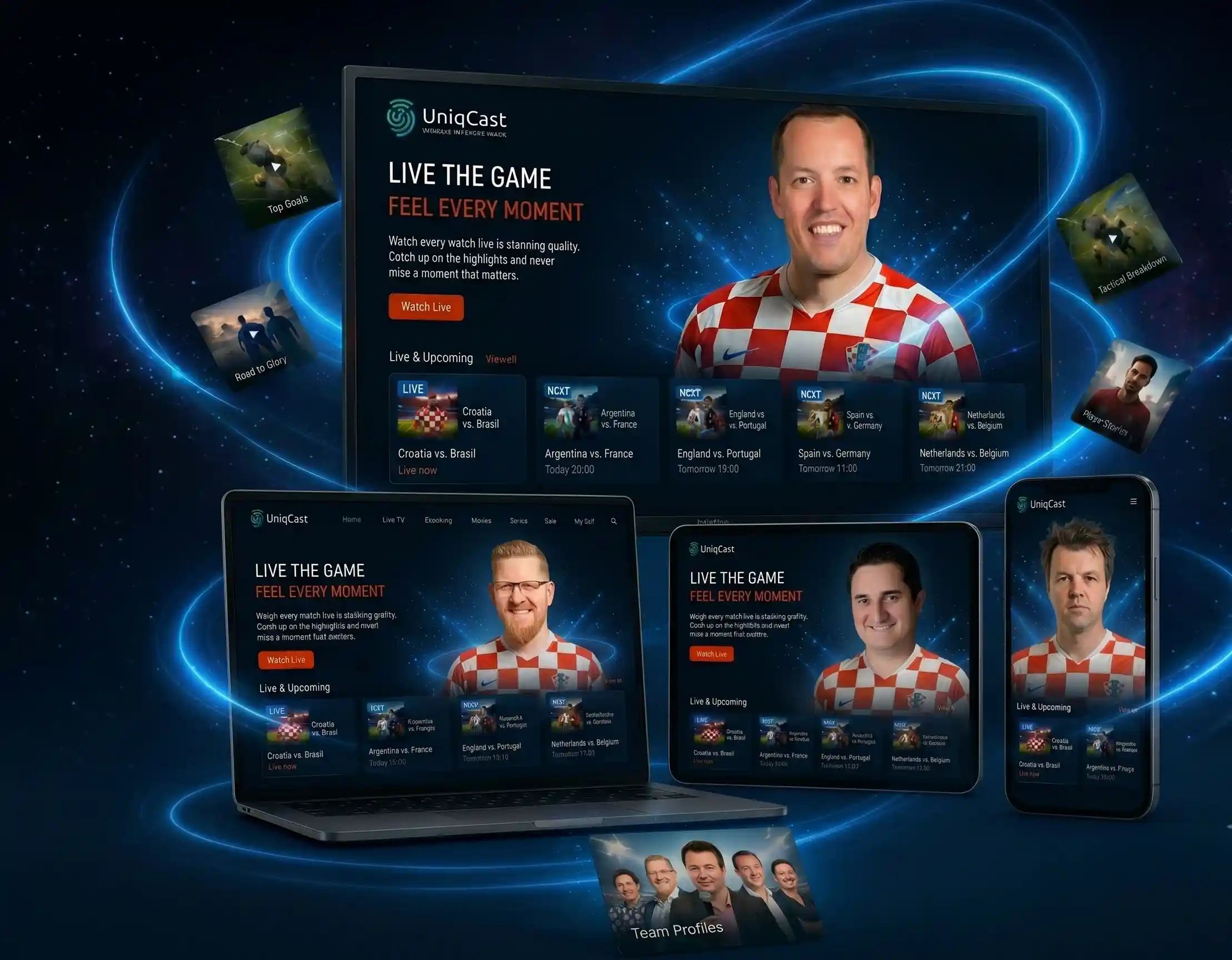
The excitement begins with qualification matches, team announcements, group stage predictions, pre-match analysis, interviews, documentaries, and endless discussions about who might lift the trophy.
This is where content discovery becomes just as important as content delivery.
When viewers open an application, they should immediately find relevant content without searching through endless menus.
Personalized recommendations, dynamic promotions, editorial content rails, and intelligent content presentation become critical tools for keeping sports audiences engaged throughout the tournament.
Because the most valuable viewer is not the one who only watches the final.
It is the viewer who comes back every day.
Live Sports Is the Ultimate Stress Test
Nothing exposes weaknesses in a video platform faster than live sports.
Peak concurrency.
Massive audience spikes.
Unpredictable traffic patterns.
Viewers switching devices.
Millions of simultaneous actions.
The World Cup represents one of the biggest stress tests any operator can face.
Infrastructure matters.
Scalability matters.
Operational visibility matters.
But equally important is what happens after the stream starts.
The user experience must remain effortless.
Fast channel changes.
Reliable playback.
Consistent quality.
Minimal latency.
Because during a penalty shootout, even a few seconds can feel like an eternity.
Why Some Operators Win During Major Sports Events
When viewers tune in for a major sporting event, they rarely think about the technology behind the experience.
They only notice when something goes wrong.
A delay.
A crash.
A buffering wheel appearing at the worst possible moment.
The operators that consistently deliver successful sports experiences usually have one thing in common:
They focus on operational simplicity long before the tournament begins.
Managing multiple vendors, disconnected systems, and fragmented workflows can quickly become a liability when audience numbers surge.
The most resilient deployments are often those built around a unified platform that gives operators visibility, control, and the flexibility to scale without introducing unnecessary complexity.
Because when millions of viewers are watching simultaneously, every additional point of failure becomes a risk.
Nobody Wants to Miss the Goal
One of the most underrated challenges in sports streaming is simple:
Life happens.
Fans get interrupted.
A phone call arrives.
Someone rings the doorbell.
The kids need something.
A train enters a tunnel.
Missing a decisive moment is frustrating.
That is why features like Catch-up TV and Start Over become especially valuable during major tournaments.
Viewers can jump back into the action without feeling like they missed the story.
The experience becomes less rigid and more forgiving.
For operators, that translates into higher engagement and better viewer satisfaction during the moments that matter most.
Highlights Are Becoming Their Own Content Category
Not every fan watches ninety minutes. In fact, many younger viewers increasingly consume sports through key moments, recaps, highlights, and short-form content.
The World Cup will generate thousands of these moments.
Goals.
Saves.
Celebrations.
Controversies.
Upsets.
The challenge for operators is no longer just delivering the match.
It is helping viewers discover the moments everyone is talking about.
This is where advanced content organization, replay experiences, highlight workflows, and short-form content strategies become increasingly important.
The definition of sports viewing is expanding.
Platforms need to expand with it.
Sports Is Now a Multi-Device Experience
A World Cup fan may start watching on a living room television.
Continue on a tablet.
Check updates on a smartphone.
Finish the match on a laptop.
And then immediately watch post-match analysis somewhere else.
For operators serving modern audiences, seamless multi-device experiences are no longer a premium feature.
They are the expectation.
The platform must follow the viewer.
Not the other way around.
Sports Fans Don't Care How Old the Set-Top Box Is
The FIFA World Cup may be one of the most technologically demanding events in television, but viewers rarely think about the hardware delivering the experience.
Some viewers may be watching through the latest smart TV.
Others may still rely on a set-top box installed years ago.
They simply expect everything to work.
For operators, the reality is often more complicated.
Many continue to serve subscribers across a mix of device generations, from the latest smart TVs and mobile devices to set-top boxes deployed years ago.
Replacing an entire installed base before a major sporting event is rarely practical—or necessary.
The most effective modernization strategies allow operators to introduce new experiences while continuing to support existing subscriber equipment.
That means viewers gain access to features like Catch-up TV, Start Over, multi-device viewing, and improved content discovery without being forced into disruptive hardware upgrades.
For viewers, the transition has to feel seamless.
For operators, it helps protect previous investments while still delivering the modern features audiences expect.
Because when the biggest tournament in the world begins, subscribers care about the match—not the device delivering it.
One Tournament. Hundreds of Different Markets.
The FIFA World Cup may be a single event, but the viewing experience looks very different around the world.
Network conditions vary.
Device preferences vary.
Business models vary.
Content strategies vary.
An operator serving subscribers in North America faces different challenges than one operating in Latin America, Europe, Africa, Asia, or island markets.
UniqCast’s customers operate across multiple continents, serving diverse audiences with different content strategies, monetization models, and technical requirements.
What works in one market does not automatically work in another.
Yet viewers everywhere expect the same outcome:
Fast access.
Reliable playback.
A premium user experience.
Whether they are watching a local league match, a continental championship, or the biggest football tournament on the planet.
Supporting these different realities requires flexibility—something that becomes increasingly important when audiences are tuning in simultaneously across multiple regions and devices.
At UniqCast, working with operators across five continents has reinforced a simple lesson:
The technology may differ from market to market.
Viewer expectations do not.
A Global Tournament Creates More Than Viewing Opportunities
The 2026 FIFA World Cup will not simply be another sporting event.
It will be one of the largest media moments on the planet.
Events of this scale are often viewed primarily through the lens of audience numbers.
Billions of people will follow matches, highlights, discussions, predictions, reactions, and celebrations across countless screens and platforms.
For operators, this is an opportunity to strengthen engagement, increase viewing time, showcase premium content, and remind subscribers why they chose their service in the first place.
Sports audiences are among the most engaged audiences in television.
The challenge is not simply attracting viewers for a single match.
It is creating experiences that encourage them to stay long after the tournament ends.
When executed successfully, a major sporting event becomes more than a temporary traffic spike.
It becomes a catalyst for long-term subscriber value.
The Final Whistle Is Only the Beginning
The matches will end. The trophy will be lifted. The celebrations will fade.
But the impression left on subscribers will remain.
Major sporting events have always been moments when operators can demonstrate the true value of their video service.
Not through marketing campaigns.
Not through promises.
But through the viewing experience itself.
The operators that deliver reliability, flexibility, discoverability, and engagement throughout the tournament will gain something more valuable than a temporary ratings boost.
They will earn viewer trust.
And in an increasingly competitive video market, trust may be the most valuable prize of all.
For a deeper look: test platform readiness.